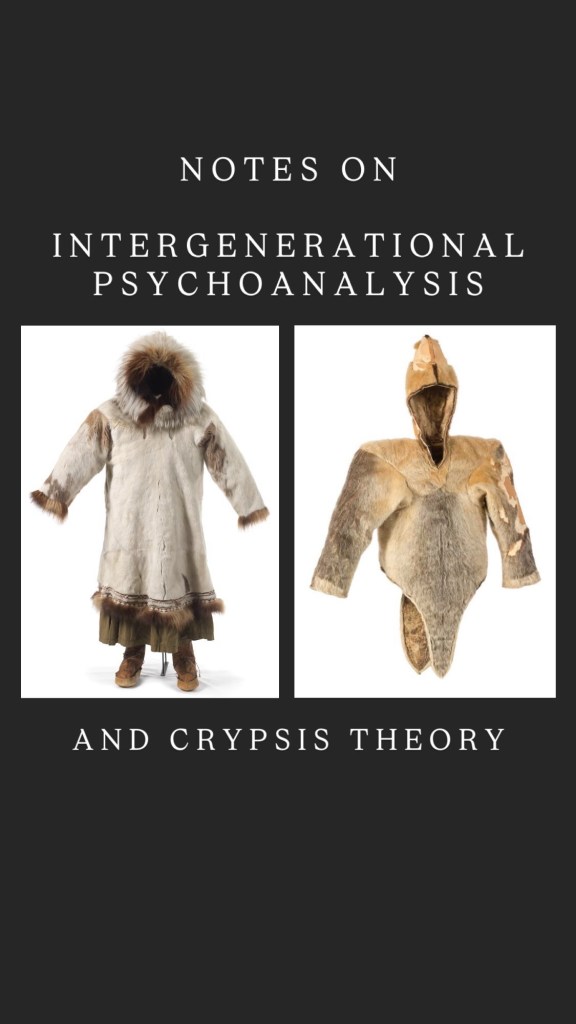
The mother, the baby, the lullaby, the father, the fire, the snow falling gently on a woven mat in the entry, a grandfather, doting, his hand gestures during an old story, where he plays all the characters.
One story about love, one about trickery and guile, one about law, one about creation, one about courage and tragedy and the unseen beings to be wondered on and feared.
And always a moral to the story, and often this is the unspoken sense of it that stays with us for a lifetime—that we try to return when we tell it again:
Like a song, trying to recreate the spirit of a thing. It is an invocation.
Looking at a written language is incomprehensible unless you know how to decypher it. Understanding what is sacred and human and everyday behind its meaning takes only the work through symbols to and metaphors to make them timelessly resonant.
They are all a roadmap built to guide us through life, to create, to sustain, to defend, to overcome the inevitable or the outlandish.
Stories are like eternal dreams, like tools for the mind in working through the arc of generations.
Storytelling has been at the core of psychoanalysis since its inception. The gods of mythology found expression in individual pathology, fixation, and adaptation: Narcissus, Oedipus, and the werewolf were cautionary tales and allegories, drawn from history for their enduring reflections in the psychodynamics of personality organization—and vice versa.
What crypsis theory allows is an understanding of how and why storytelling, mythologization, and performativity are biologically rooted in human social and cognitive processes—for better and worse. I would not say that humans are born actors but that we are adept at play, and clever with both guise and disguise, as an innate part of our adaptive hunting strategy. It’s when the latter complex turns itself against its own human community that we have reason to regret and guard against our ability to augment perception as a perceived survival technique—one that when misguided gives way to inauthenticity, paranoia, horror, and uncanniness.
If guile and duplicity were primary traits of strength and adaptation, we would find them enshrined in laws and customs and sentiments of valor—however, exactly the opposite is the case. Our myths, moral codes, and wisdom traditions almost universally deride and wholeheartedly condemn the wolf in sheep’s clothing—and for good reason. The impulse is disordered, pathological, and antithi-biological. It in fact can not rationalize individuation, progenation, and intergenerational social plurality. The complex as object relations mechanism is fundamentally withered, shrewd, resentful, and tragically self-destructive.
It does not respect life and it does not want things to grow, in its irrational dependancies. The wolf in sheep’s clothing is only part of the herd at the depth of its costume. This is, of course, rightfully unsettling.
But humans have never been afforded to take guile lightly, and history is etched with the strewn memory of brief eras where it was tolerated for truth long enough to wreak an almost impossible, nihilistic havoc on collective psyches and cultural traditions. The wake is often rendered on human memory in senseless devastation and cargage. And still we slip back into playing and repression.
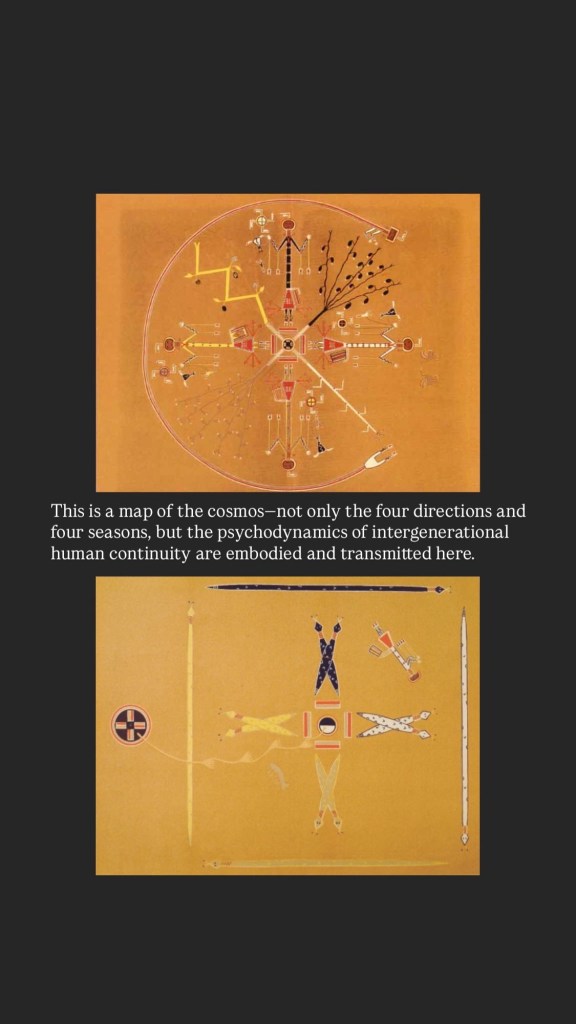
But the essence of crypsis theory also holds that human traditions—particularly in language, craft, and storytelling—carry human morality, and suggest wholesome continuity, if only a balance of the wayward and steadfast of interwoven generations can harmonize and stand quiet guard against the unreal.
Update 06/17/26 (Just further notes) :