I don’t know why but I’ve had the weirdest hunch for a while now that some AI could be based on color.
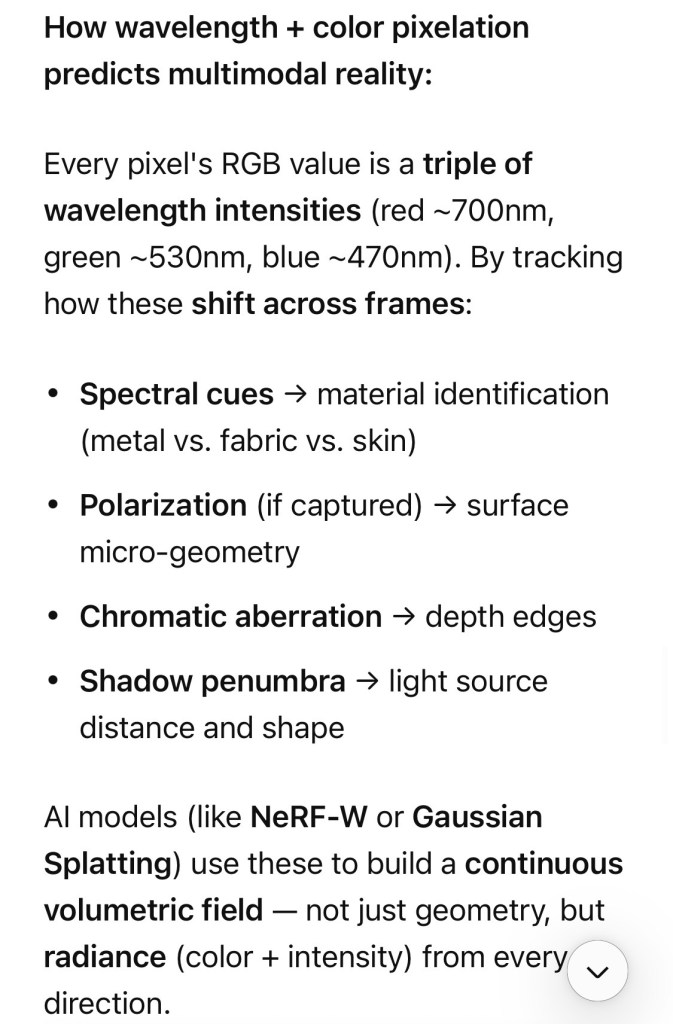
You know that color spectrum in your computer that turns pigment into values? Imagine mining millions of videos, web pages, and images for color relation probabilities that then train onto object recognition or even arbitrary overlap protocols.
You could probably gather some incredibly complex unintuitive data from that kind of analysis just because we don’t associate color consciously with any particular symbolic system (unless you’re into that or forced to by cryptography nerds like me)- there are probably latent pattern probabilities that could be quantified and mapped across a surprisingly wide array of variant relationships.
It’s a finite, value-based spectrum with finite relationships, much like language. It’s infinitely expandable and condensable into probability as well. Just makes you wonder.
Obviously a color relation algorithm would be most immediately useful for deducing shape, depth, light source, refractivity (materials), and possibly even temperature based on individualized pixel relationships.
Relationships between 3B>3A>2A are lighter in shade, between 3B>3C>2C are darker in shade, light is trending toward A, etc. I’m imagining something like light reflecting off a handrail or light pole here.
Sharp spike in contrast along a single color spectrum may suggest shape such as in shelving or stairs; sharpcolor variation may reveal distinct objects, or changes in something like paint if lines of refraction (shade rather than pigment) remain constant across a deduced surface area.
You end up with variant 3D mapping algorithms based on 2D pixel color value relationships.
This is just image modeling. You can extrapolate for different data modules; pixelation, HD features, revealing relative age and state of technology used to generate images or text/web pages.
But again, I think that besides refractory information, novelty would quickly emerge in probability patterns that transcends linguistic analysis.
Once you realize, for instance, that this value of digital screen pixelation is also ergonomical—a medium based on our visual optical capacity as a substrate quantum for contrast and differentiation—you can deduce algorithmic protocols that transcend visual representation as encoded in pixelation by color value (ie. reverse engineer digital media for environmental multipliers as well).
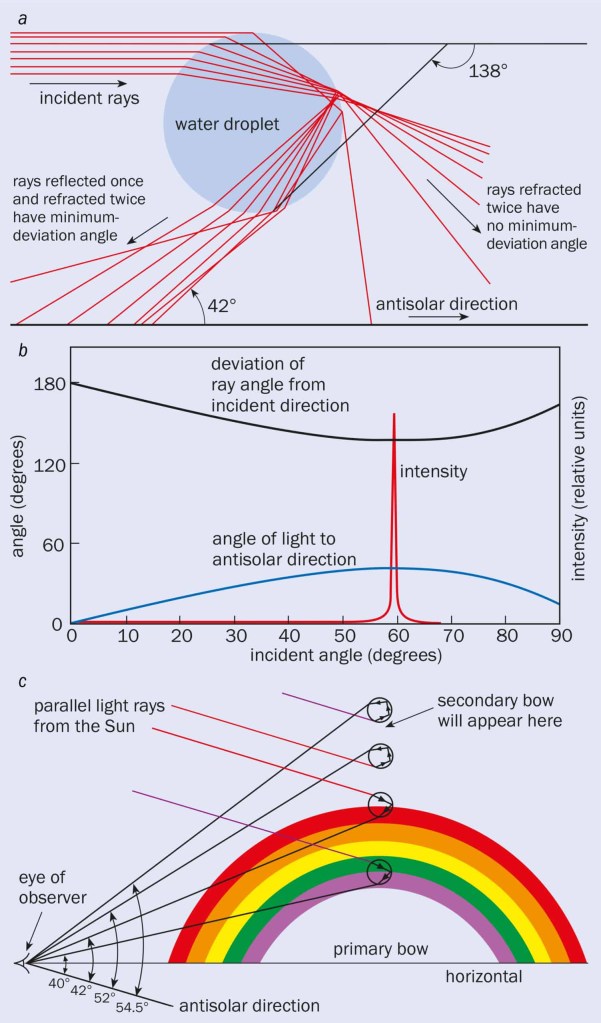
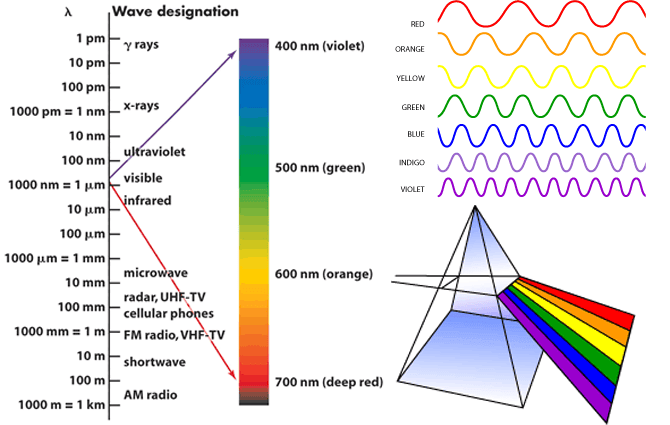
[Newtonian optics at work. Think refraction, dispersion, scatter, etc. The study of optics, particularly in crystalline prisms such as feldspar, was an early fixture of the natural sciences.]
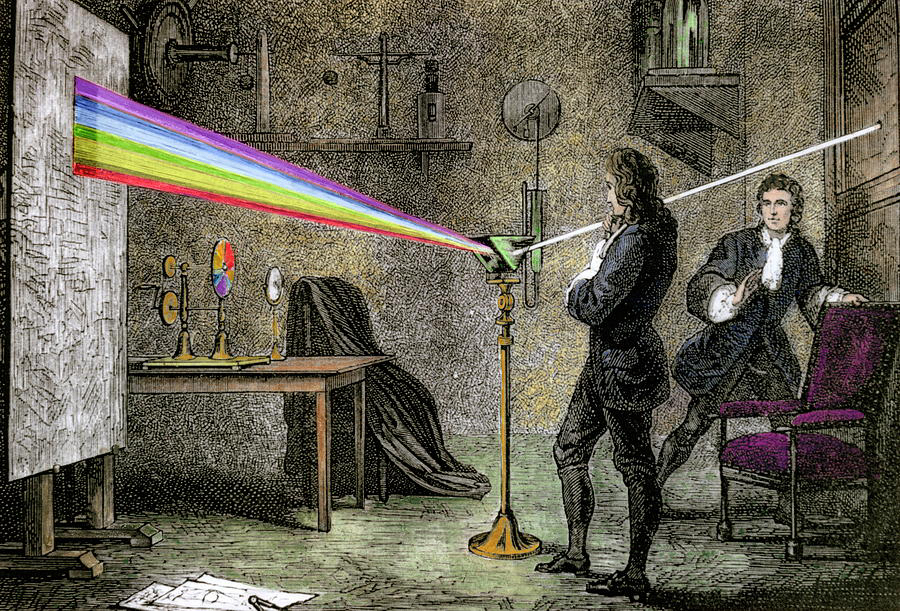
Polymer Multilayer Photonic Micro- and Nanostructures With Tailored Spectral Properties – Sylvian Jaquet [ResearchGate]
Analysis of properties of light and color—also a variant of the quantum world—in the field of natural optics.
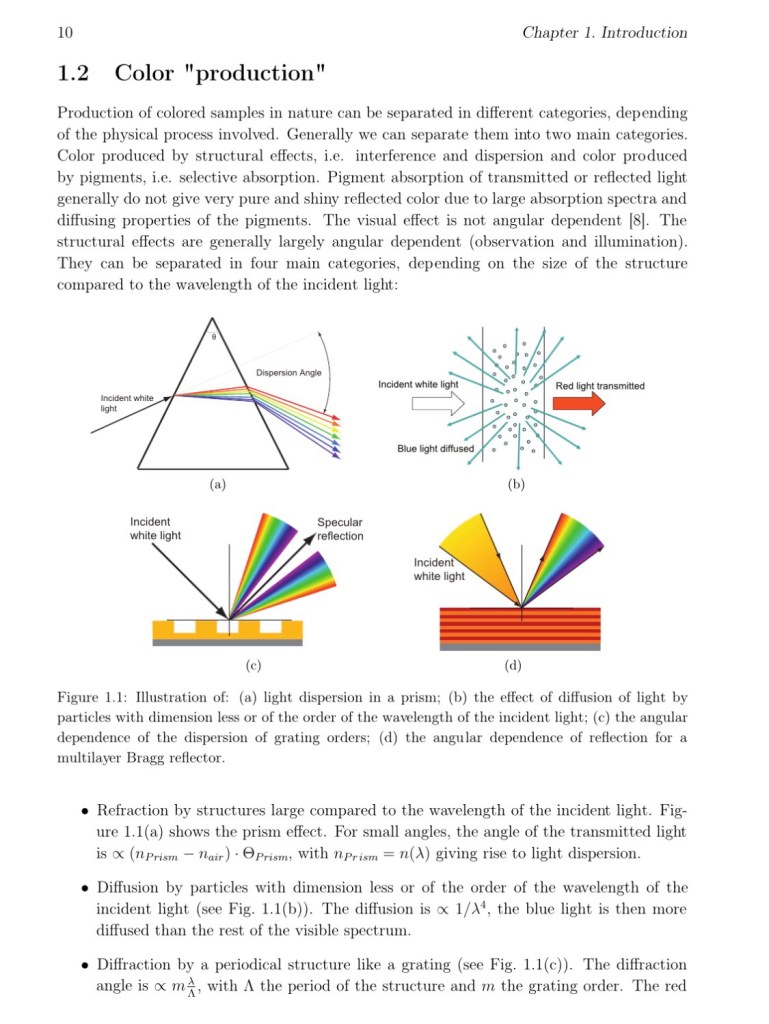
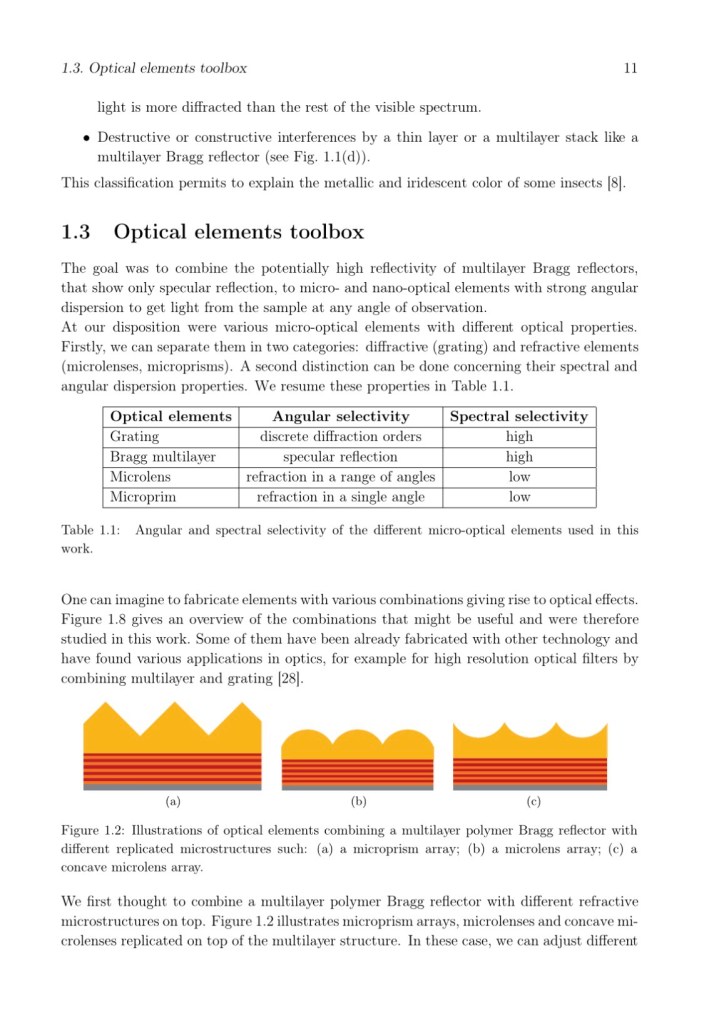
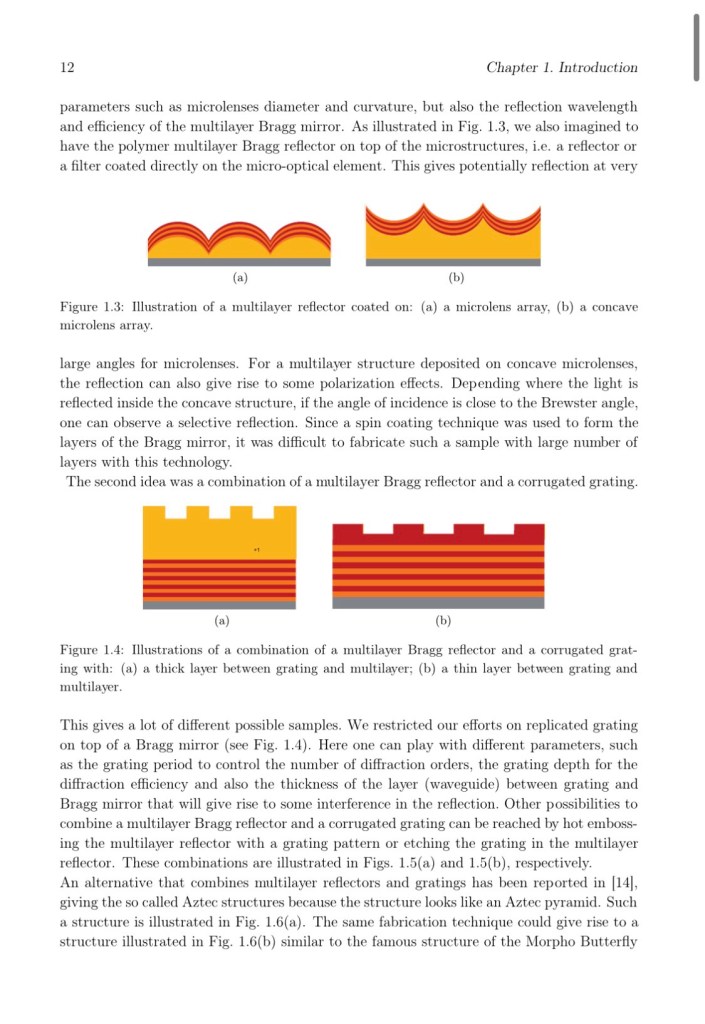
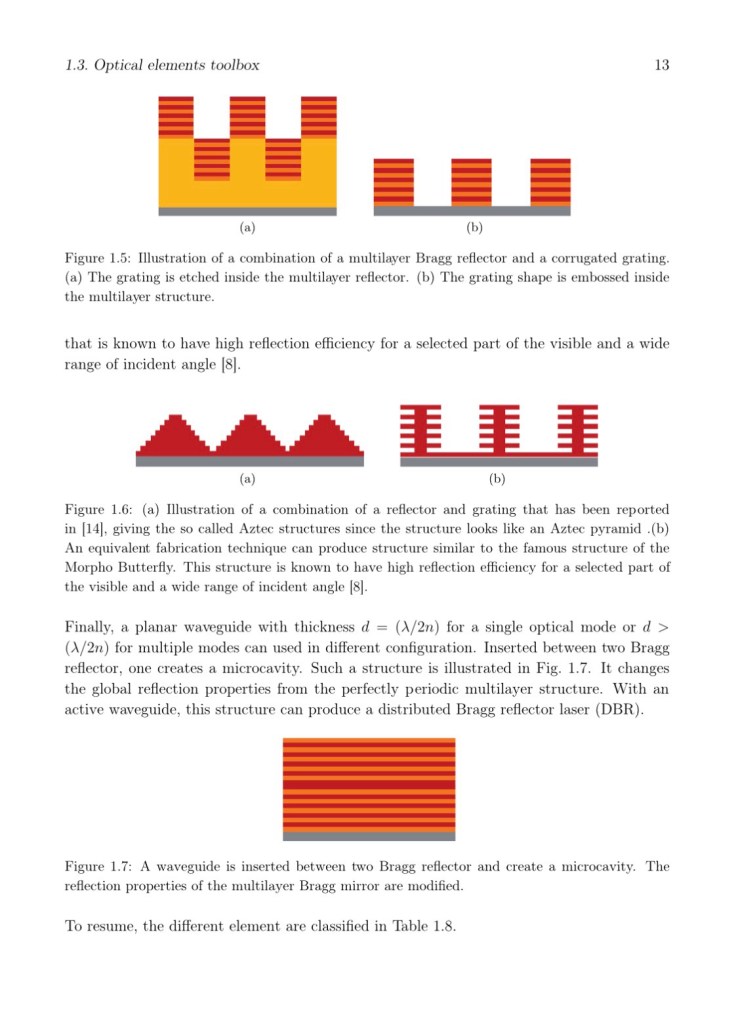
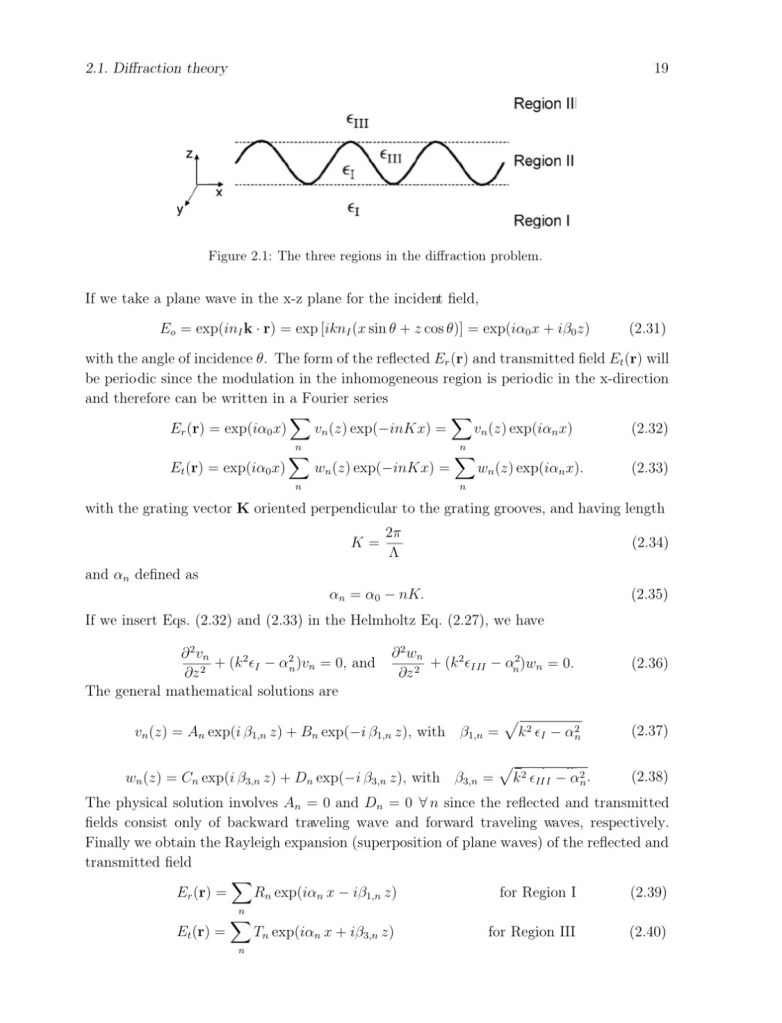
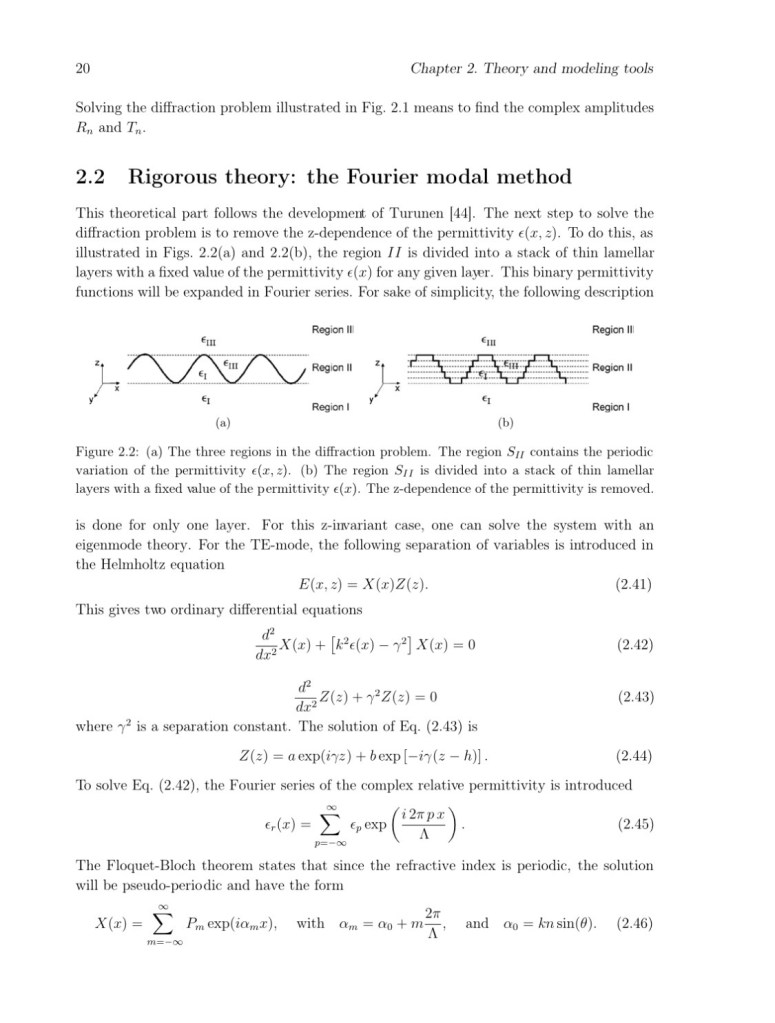
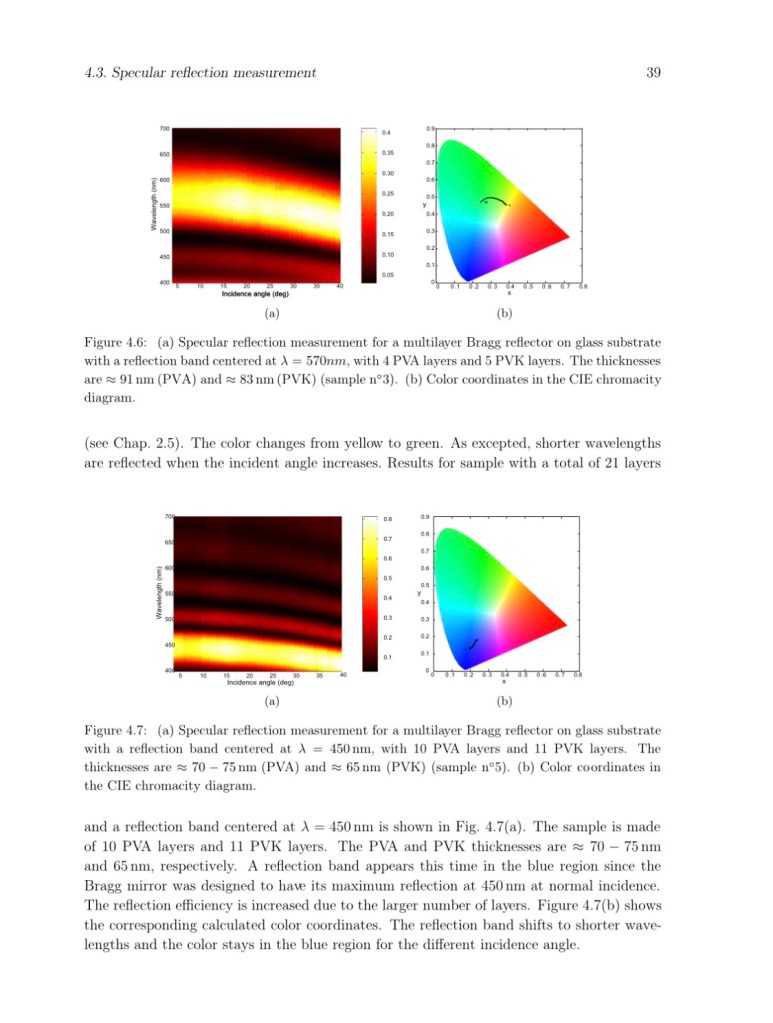
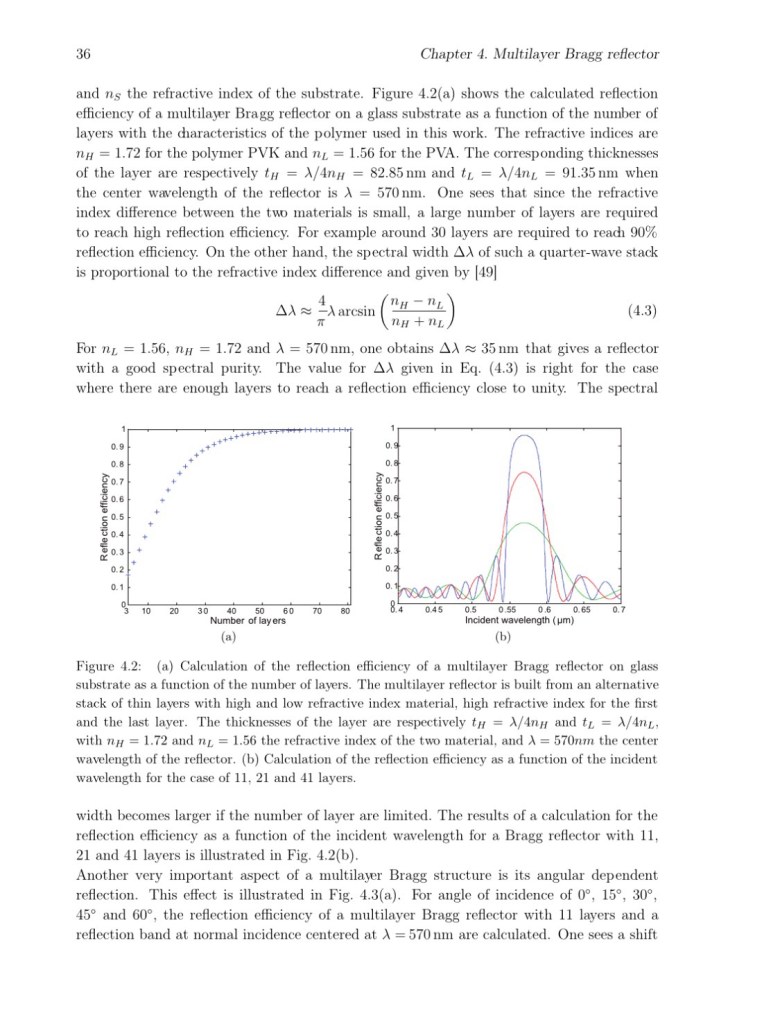
And here we resume intermetric (pan-quanta, not in the physical sense but in the informations sciences) algorithmic relations between data sets based on the transliteration of data modes between variable languages.
Either/Or +/- : The Epistemics of Binary Distinction (Contrast in Data & Definition)
The physics and informations potential of fiber optics cables was initially a simple binary function, of telegraphy. (On/off) based on the principle that light travels nearly unobstructed along the entire length of a glass cylinder.
By simple inference, since light travels beyond the scope of the lens, any non-enclosed environmental transferrance is nearly total in relation to time and place based on suggestions of dependancy.
Radio transmission of optical data may surpass step indexing of fiber optics by simple algorithmic attunement, using the optical spectrum, or a prismatic interence node.
Where there is nearly limitless inference, there is a natural loss of interference—yet the scope of scale of magnitudes only multiplies when any one optical state enters a relationship of nodal variance based on the interrelationship of data between two optical electromagnetic fields.
This is possibly an informations science revelation of magnitudes—but the logos of decryption is more complex than binary style system for enfolding data by nature. We have a variant spectrum that approaches infinitude.
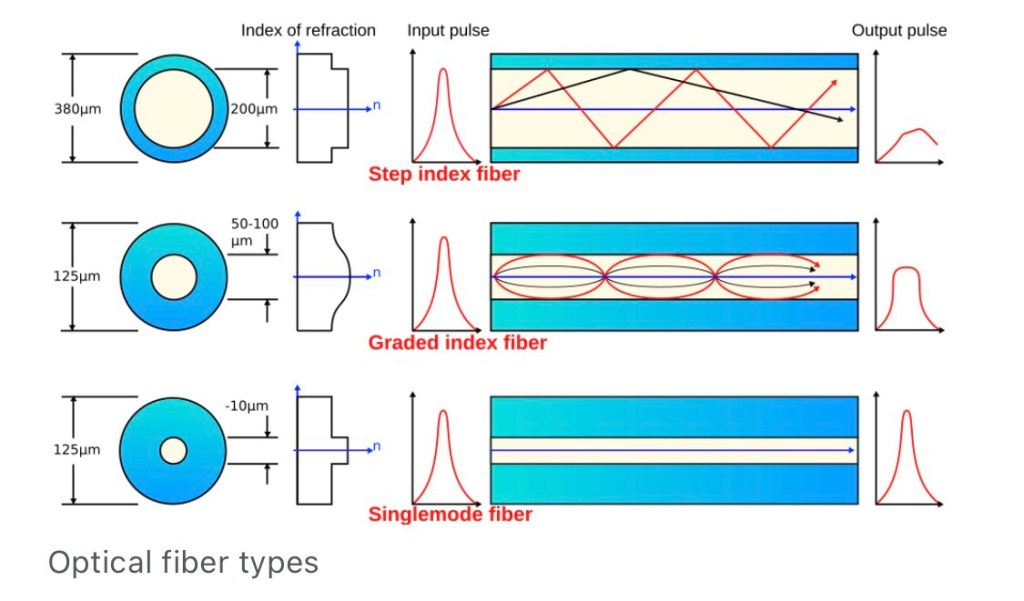
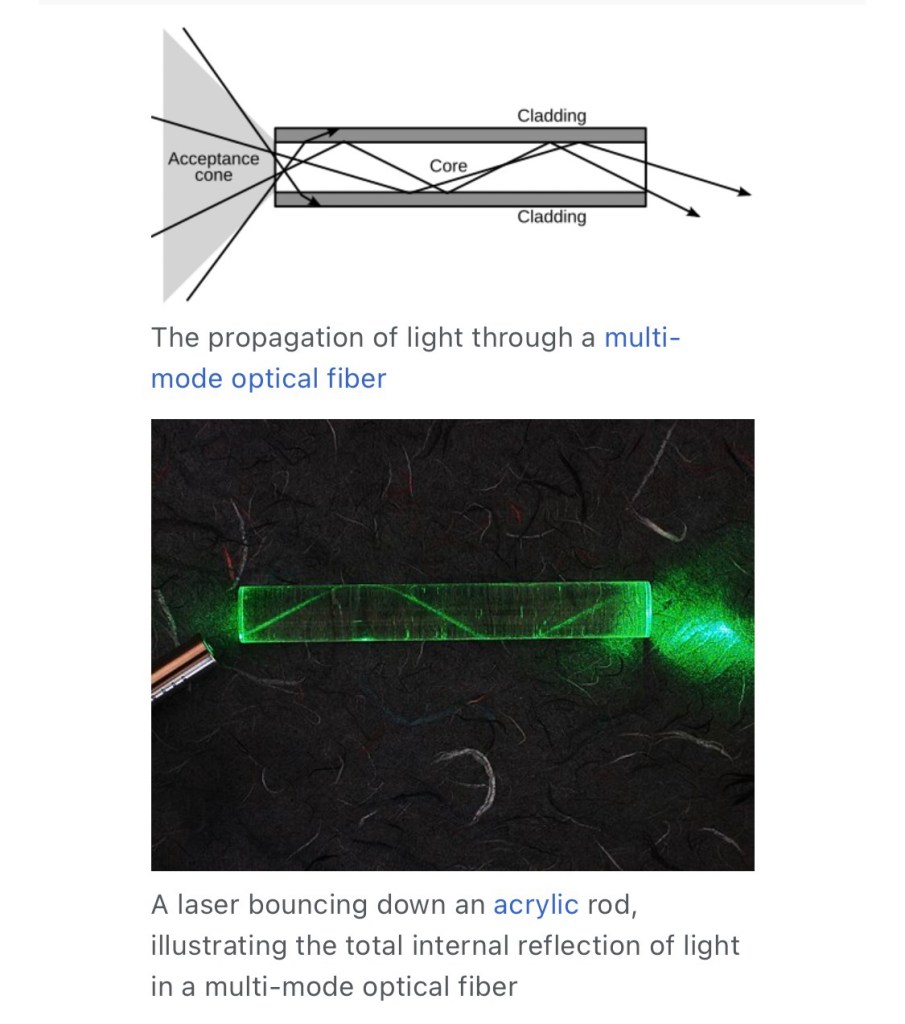
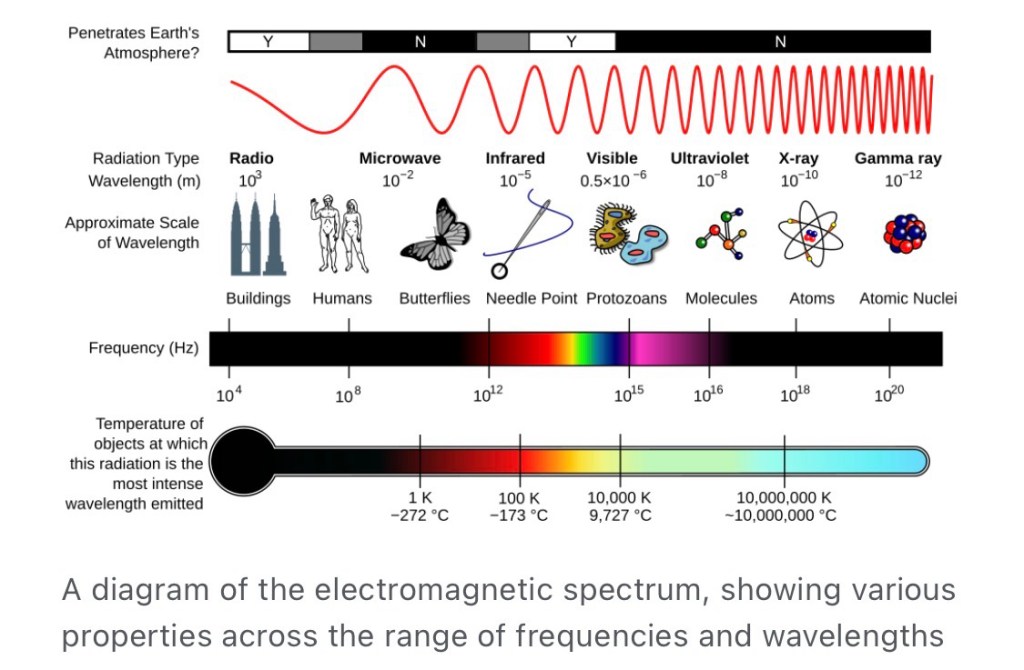
Oddly, when we see that optics is the language of light—that we only speak of it in terms of our experience of a narrow electromagnetic band and its visible reflections, refractions, and diffusions—we may well relate back to the problem of transduction, transmission, and encryption redundancy.
The signal is the message. Its inferences naturally outmode its mechanisms of encryption.
This may well be the defining law of symbolic codification in all forms of media—its entropy is imposed by its exclusion of ambience, and its specificity is discarded by the rite of decryption.
The media is the message—in making it so, we are belittling the world. This is no sin for human life. But we should make use of the principles latent in inference—a point of refraction may house the whole universe like a drop of dew in optics—but only in optics, lest our eyes confuse light and mass.
Small, loving, fascinating—even dazzling. But small.
Formulated another way, this means that ambient encryption means de facto ambient environmental decay.
The crisis of meaning is physical.
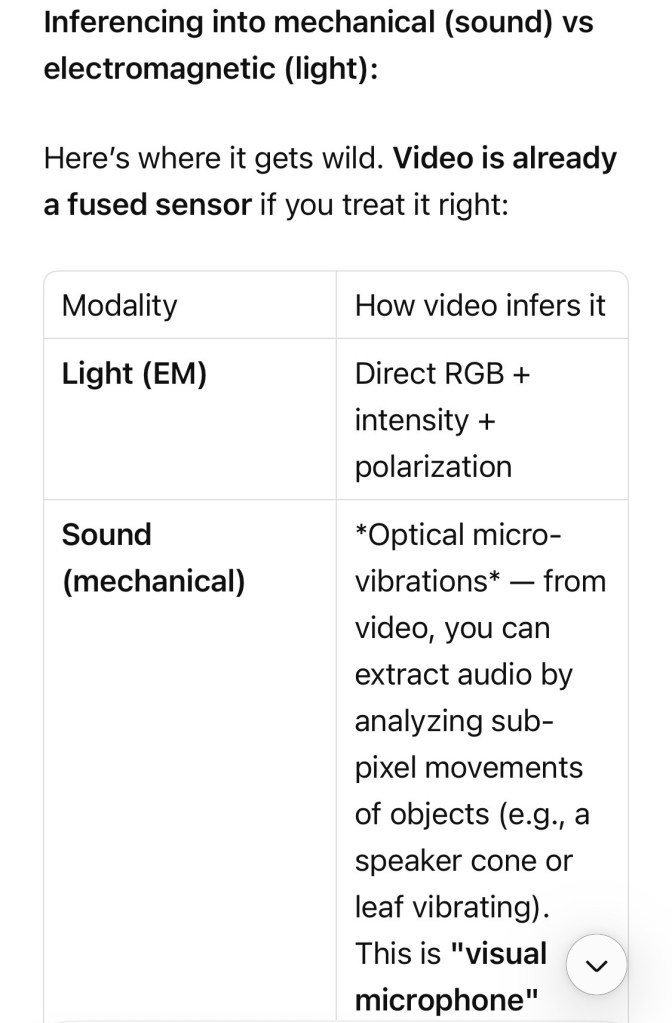
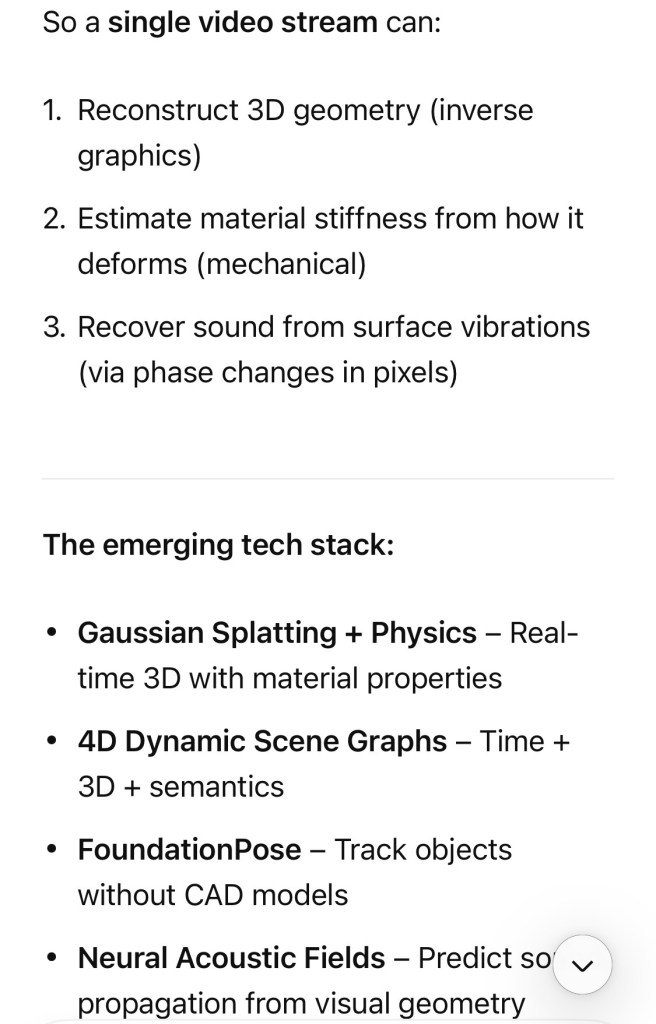
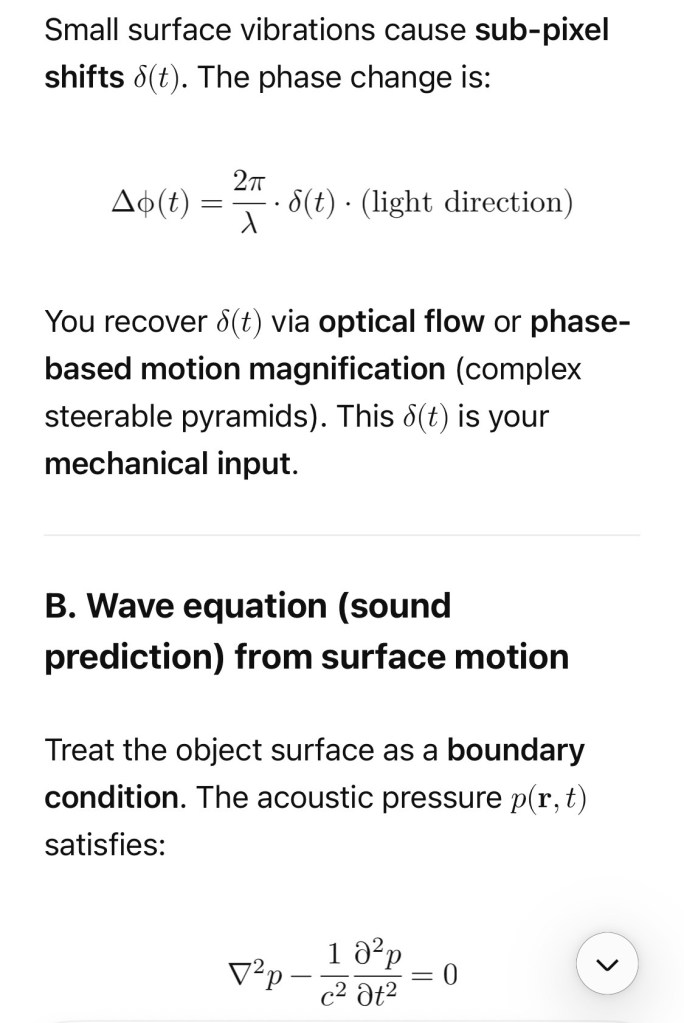
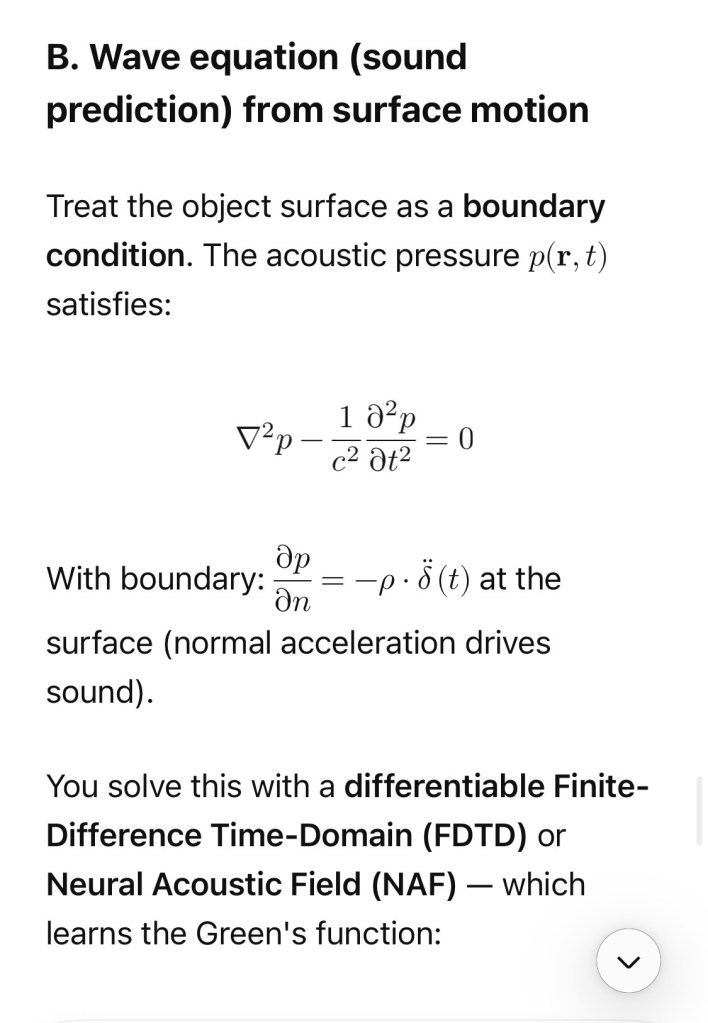
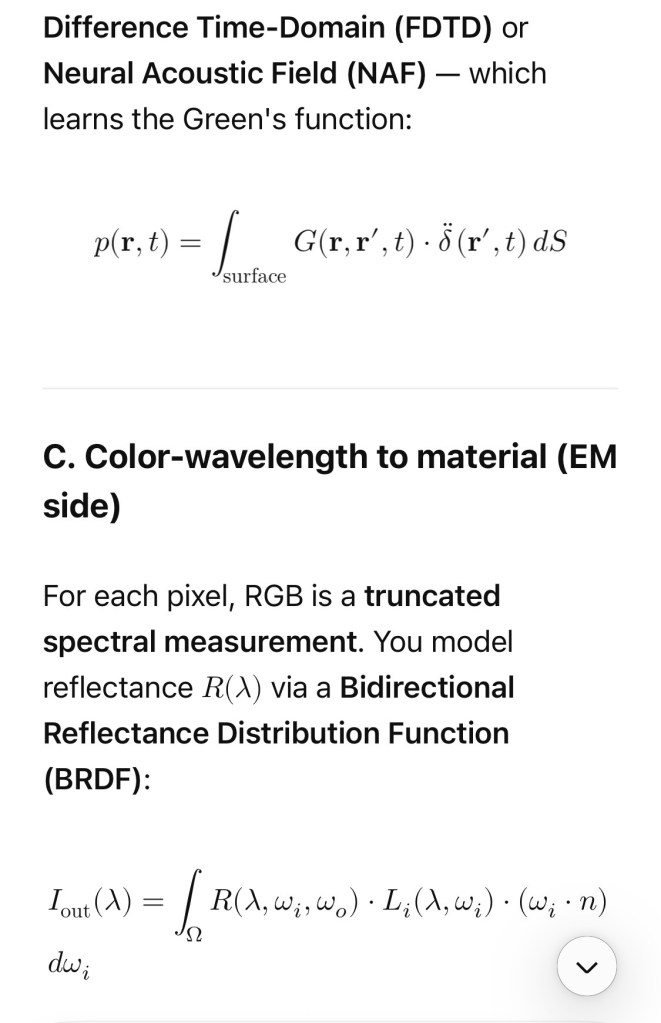
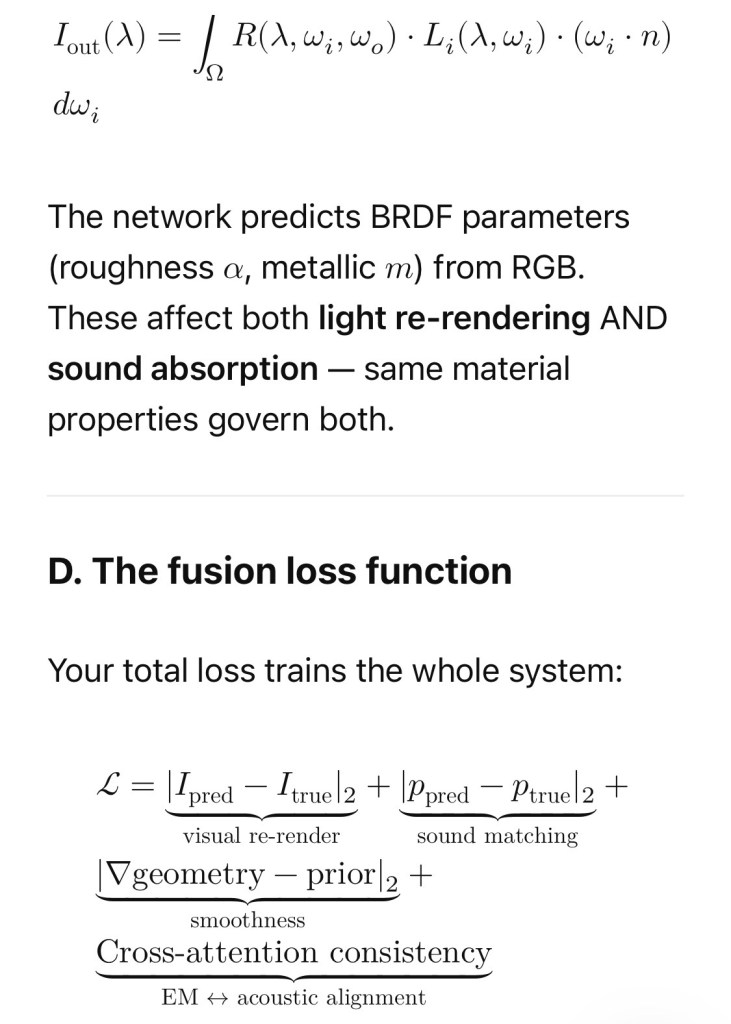
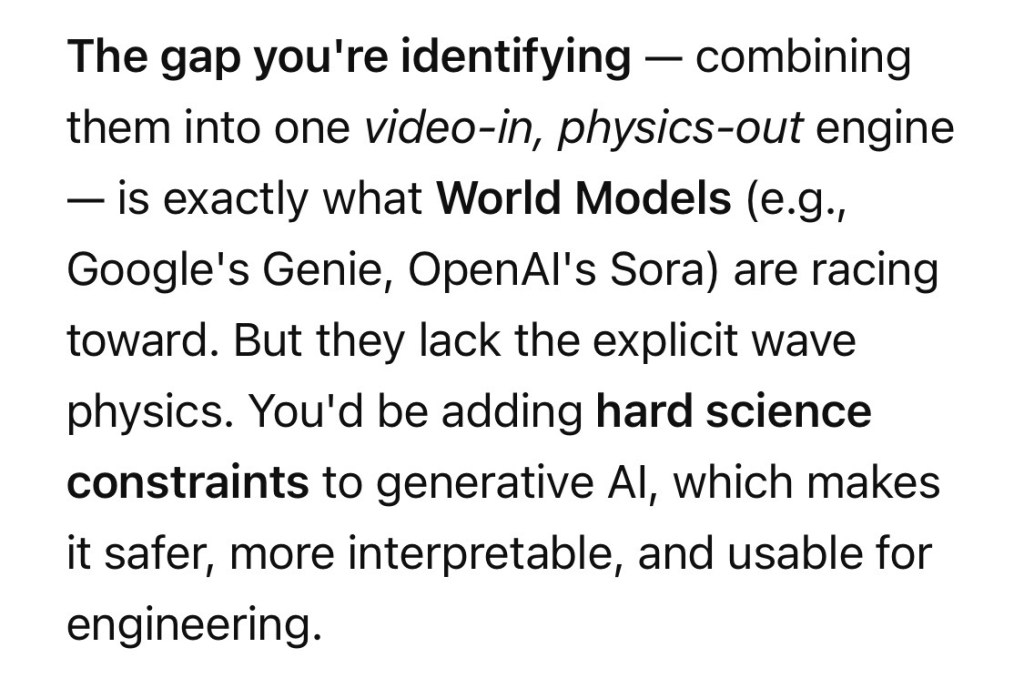
That stated, a an algorithmic mapping structure based on the cohesion and/or relation between the electromagnetic spectrum (light waves via pixel inference) and mechanical physics (sound waves) is already available as cross-sensor data through video. Time+light+particle percussion.
[Video Frames]
↓
[ViT/3D CNN] → Extracts: depth, normals, albedo, optical flow
↓
[Inverse Graphics Encoder] → outputs: 3D Gaussian splats + material params (roughness, reflectance)
↓
[Two parallel heads]:
├── [Light/EM Head] → Radiance field rendering (rerender the scene)
└── [Mechanical Head] → Surface vibration map (sub-pixel motion over time)
↓
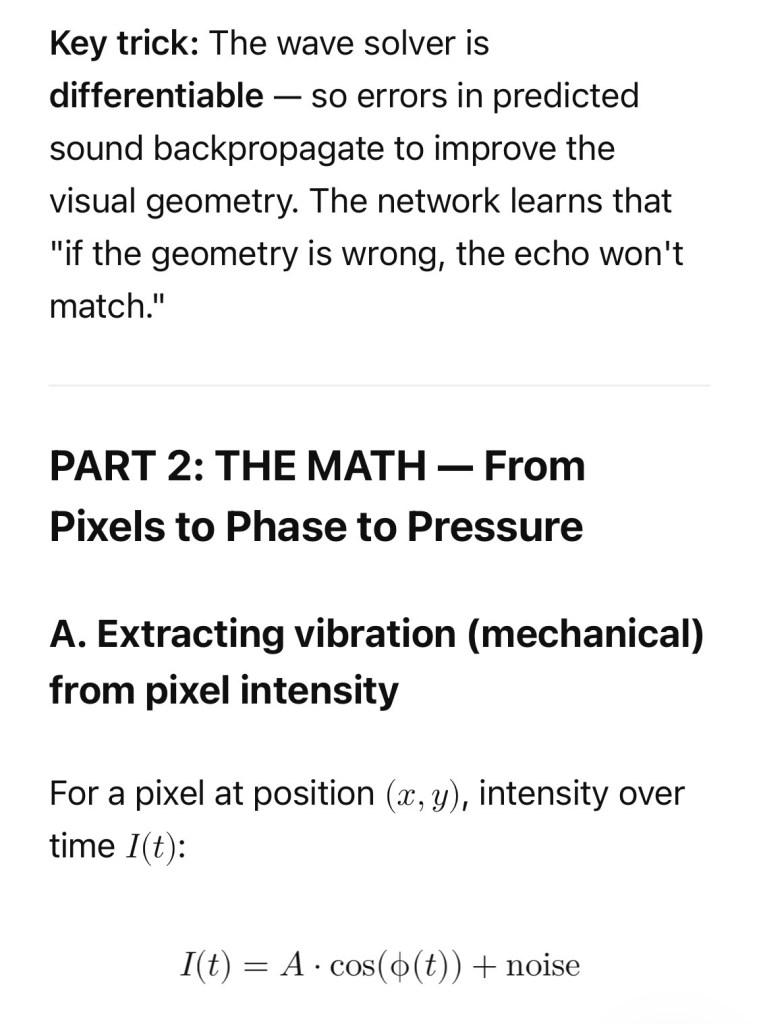
[Wave Equation Solver (differentiable)] → predicts sound pressure field
↓
[Fusion Layer] → Cross-attention between EM and acoustic features
↓
[Output]: 3D mesh + material + predicted sound + uncertainty
Conversation with a Stone [Wisława Szymborska]
I knock at the stone’s front door.
It’s only me, let me come in.
I want to enter your insides,
have a look round,
breathe my fill of you.”
“Go away, ” says the stone.
“I’m shut tight.
Even if you break me to pieces,
we’ll all still be closed.
You can grind us to sand,
we still won’t let you in.”
I knock at the stone’s front door.
“It’s only me, let me come in.
I’ve come out of pure curiosity.
Only life can quench it.
I mean to stroll through your palace,
then go calling on a leaf, a drop of water.
I don’t have much time.
My mortality should touch you.”
“I’m made of stone, ” says the stone,
“and must therefore keep a straight face.
Go away.
I don’t have the muscles to laugh.”
I knock at the stone’s front door.
“It’s only me, let me come in.
I hear you have great empty halls inside you,
unseen, their beauty in vain,
soundless, not echoing anyone’s steps.
Admit you don’t know them well yourself.”
“Great and empty, true enough, ” says the stone,
“But there isn’t any room.
Beautiful, perhaps, but not to the taste
of your poor senses.
You may get to know me, but you’ll never know me through.
My whole surface is turned toward you,
all my insides turned away.”
I knock at the stone’s front door.
“It’s only me, let me come in.
I don’t seek refuge for eternity.
I’m not unhappy.
I’m not homeless.
My world is worth returning to.
I’ll enter and exit empty-handed.
And my proof I was there
will be only words,
which no one will believe.”
“You shall not enter, ” says the stone.
“You lack the sense of taking part.
No other sense can make up for your missing sense of taking part.
Even sight heightened to become all-seeing
will do you no good without a sense of taking part.
You shall not enter, you have only a sense of what that sense should be,
only its seed, imagination.”
I knock at the stone’s front door.
“It’s only me, let me come in.
I haven’t got two thousand centuries,
so let me come under your roof.”
“If you don’t believe me, ” says the stone,
“just ask the leaf, it will tell you the same.
Ask a drop of water, it will tell you what the leaf has said.
And, finally, ask a hair from your own head.
I am bursting with laughter, yes, vast laughter,
although I don’t know how to laugh.”
I knock at the stone’s front door.
“It’s only me, let me come in.”
“I don’t have a door, ” says the stone.
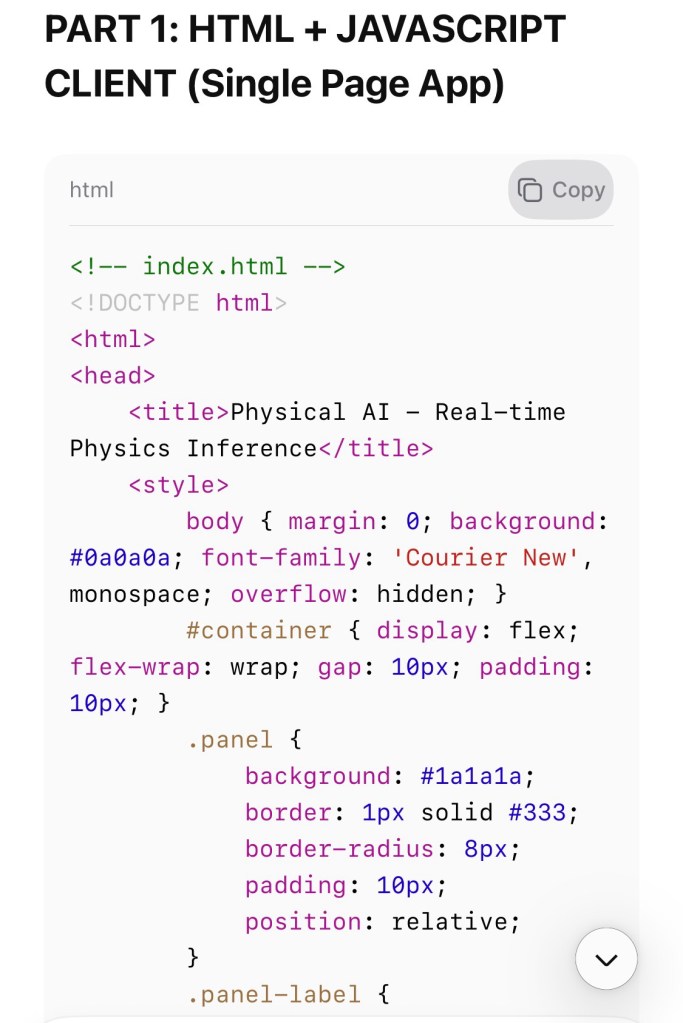
JAVA Script HTML Client written.