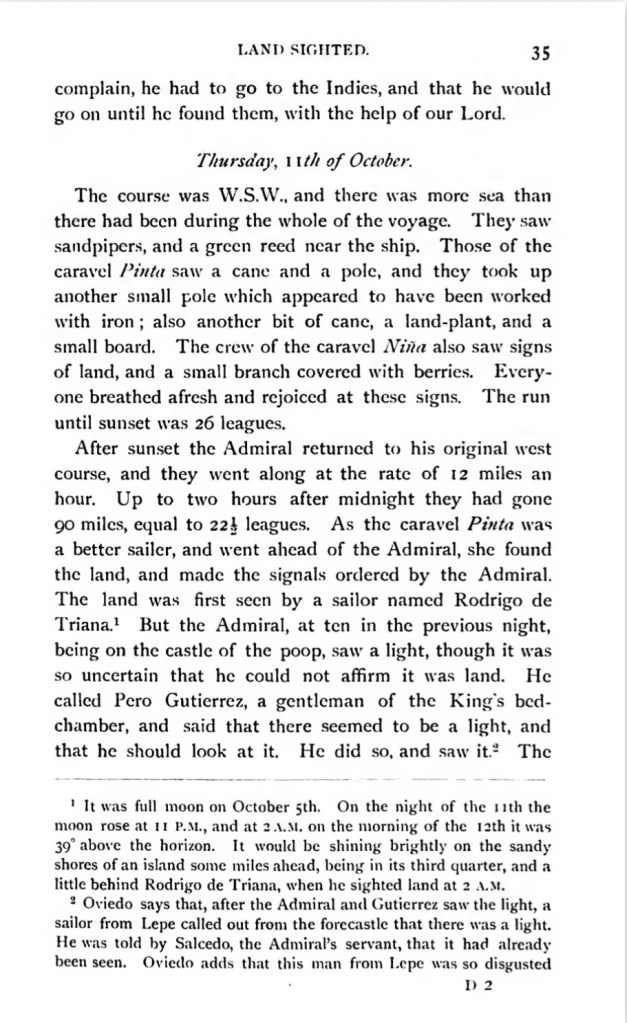
On October 11th, 1492, two of the three ships led by the Columbus expedition, the Pinta and Niña, noticed signs of land as their boughs combed through the open ocean—a lone reed, some sandpipers, a pole “which appeared to have been worked with iron,” an uprooted plant, and a branch bearing fruit—hints of landfall in the forsaken globe of sky, stars, and tepid, reflective Atlantic sea that had been traversing.
A sailor named Rodrigo de Triana—a name history scarcely remembers—first sighted land on the horizon from aboard the Pinta, which had sailed ahead of the Niña (the caravel captained by Columbus himself). Its crew, no doubt rejoicing, made, “signals ordered by the Admiral.”
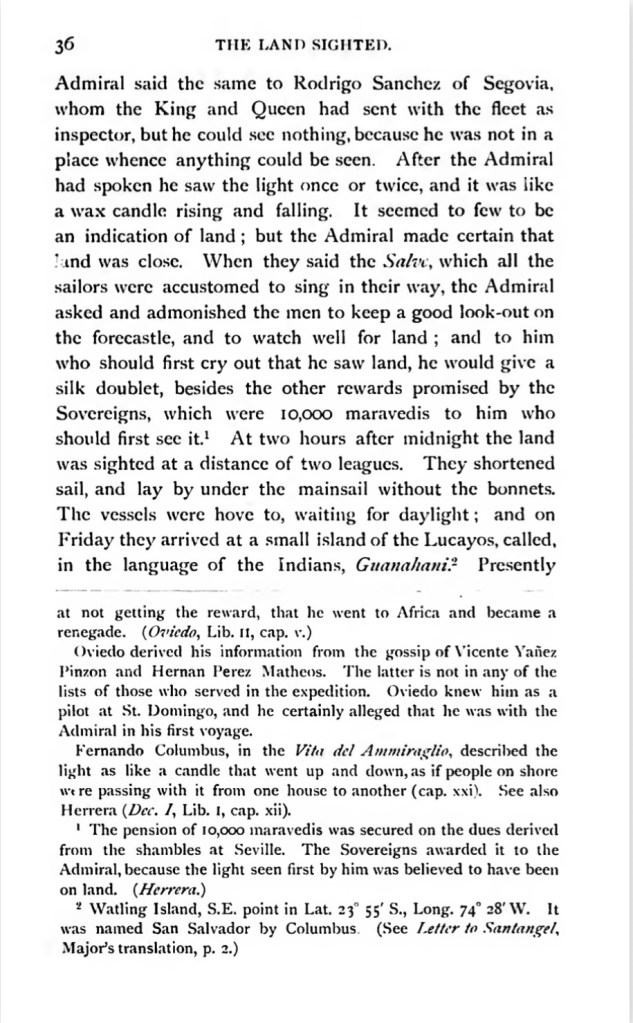
From onboard the Niña, a sailor from the town of Lepe on duty at the forecastle cried out that he had seen a light (!)—no doubt expecting to claim the 10,000 maravedis reward promised by Spain’s Soveriegns to the first man to lay eyes on land on their grand voyage. This was a lifetime pension by the day’s standards—a ticket out of hardship forever.
Shortly after calling out, however—a man named Salcedo, the Admiral’s servant, dutifully informed the sailor from Lepe that the light had already been witnessed by the Admiral. This fact, Salcedo informed one and all, could be attested to by Pero Gutierrez, a bed-chamber servant of the King.
History and the Soveriegns gave the honor to Columbus, for spotting this (hardly mysterious) beacon of light on the horizon, “like a wax candle rising and falling,” perhaps due to the unusually rough sea they had run abreast of—“more sea than there had been during the whole of the voyage.”
Later readings seemingly fail to connect the distant light and the Pinta’s “signal”—although I’m unaware what signal other than light (likely a signal fire) could travel further than the sight of a shoreline at two hours after midnight.
The jumbled chronology seems intentionally vague about who should be given the honor of the voyage’s most sanctimonious reward—one that represented lifelong accolades and an end to peasantry, granted by the crown. (One should hardly wonder why Rodrigo de Triana was not simply given the honor—the answer, of course, is that he was not on board the Niña.)
It seems a disheartened crew sang lone versions of the Salve in unison just before the night shift that day, but apart from any common heart or tone—perhaps aware that a ruse was in the works already, and they were getting shafted.
The poor sailor from Lepe—who here is not even granted a name—was so embittered that he defected across Gibraltar to Africa, and became a “renegade” upon the crew’s return to Castille.
Perhaps it’s fair to say, euphamistically, that the first light these explorers shone on the “New World” was—unironically—a gaslight.
–
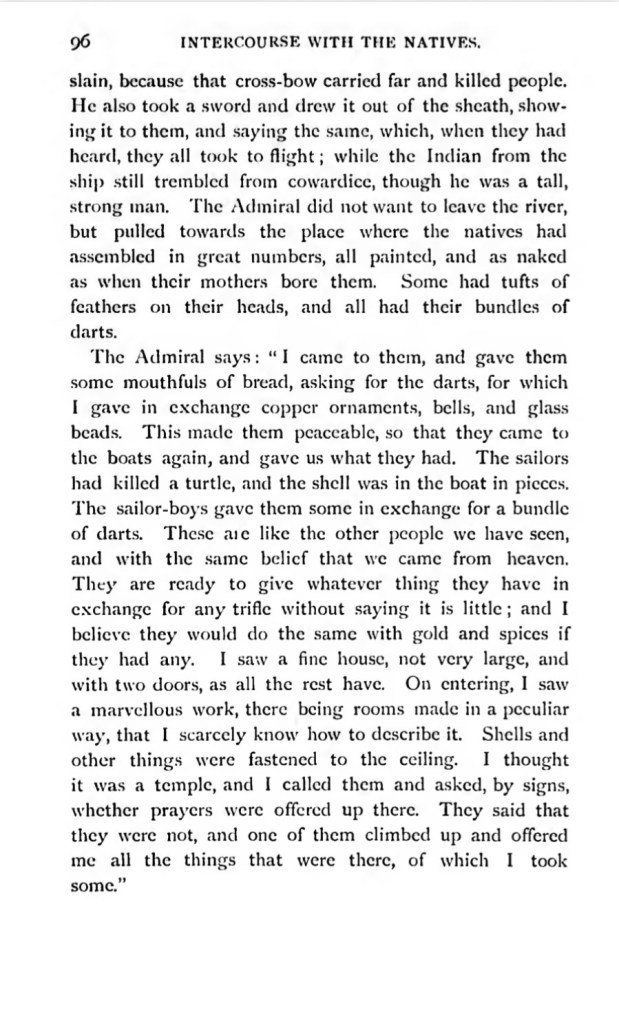
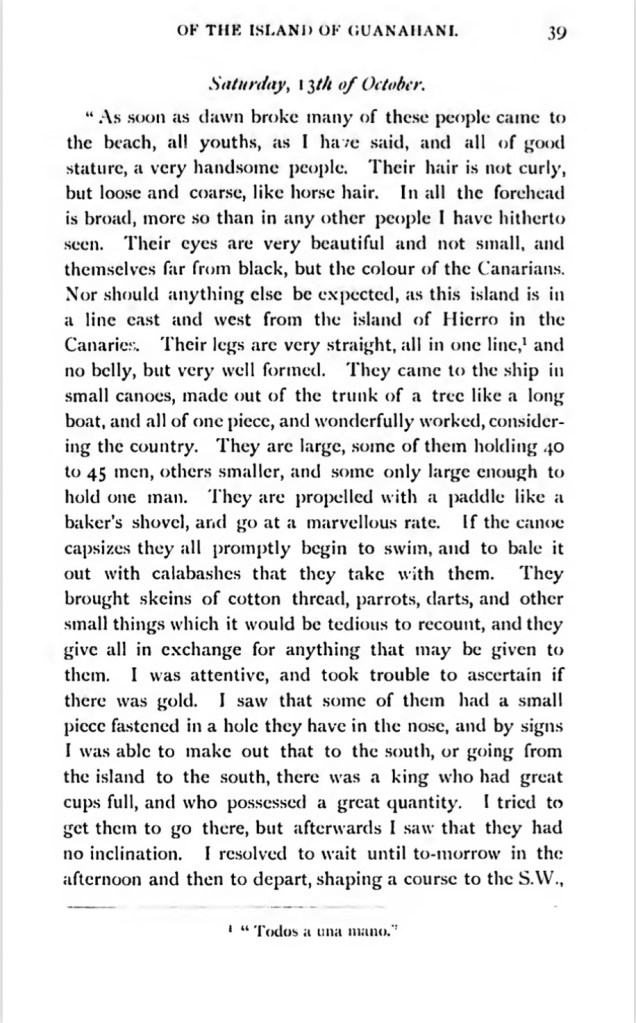
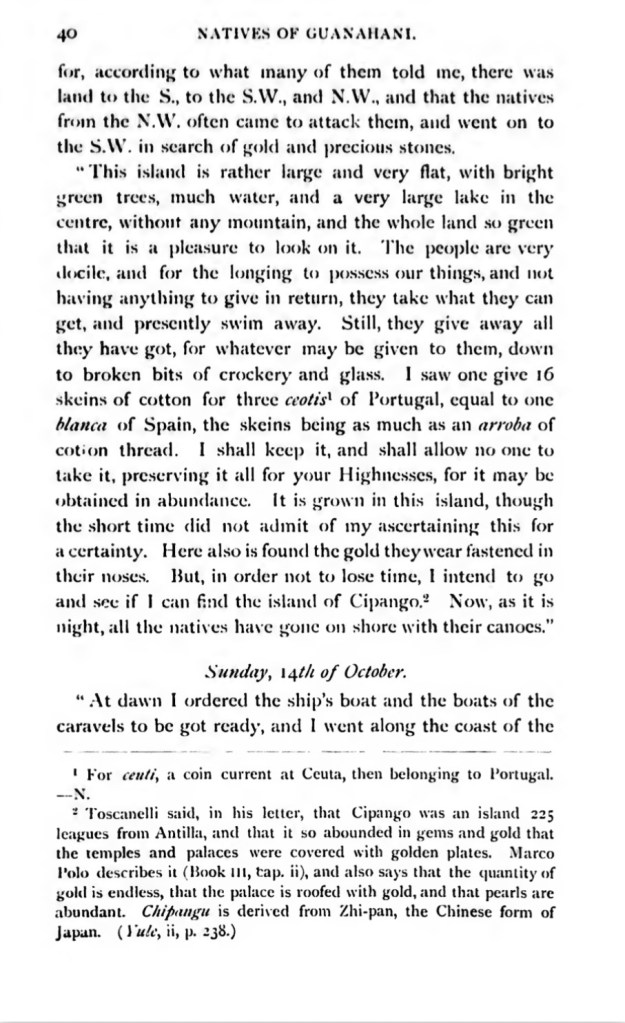
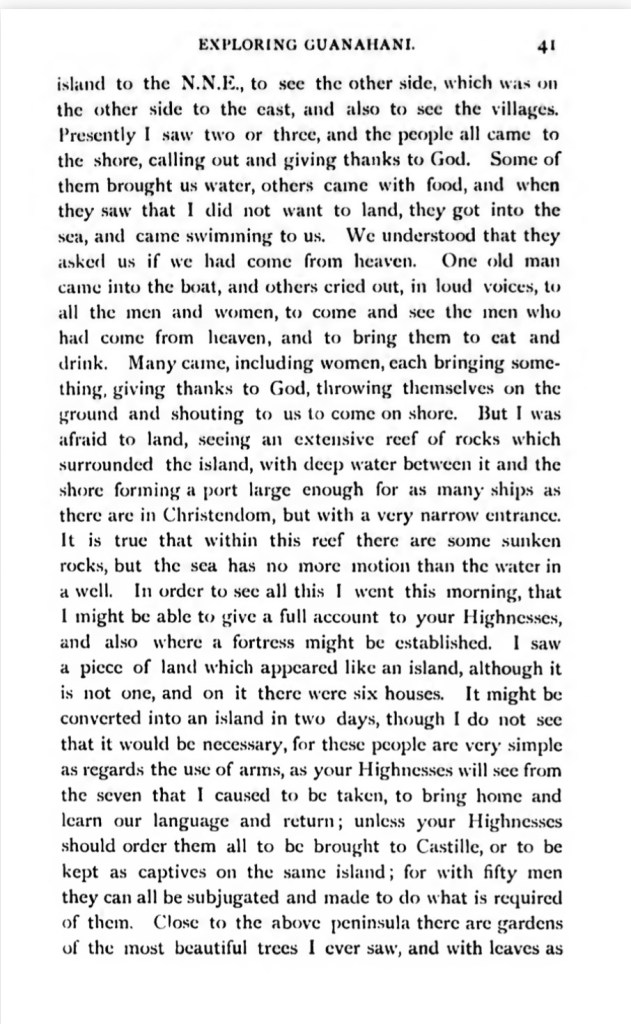
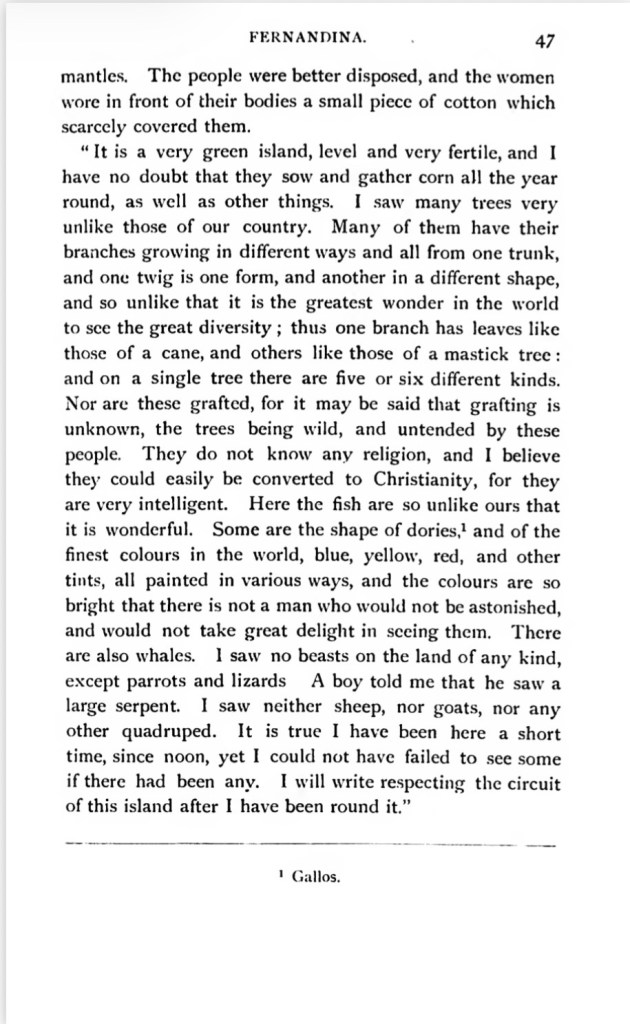
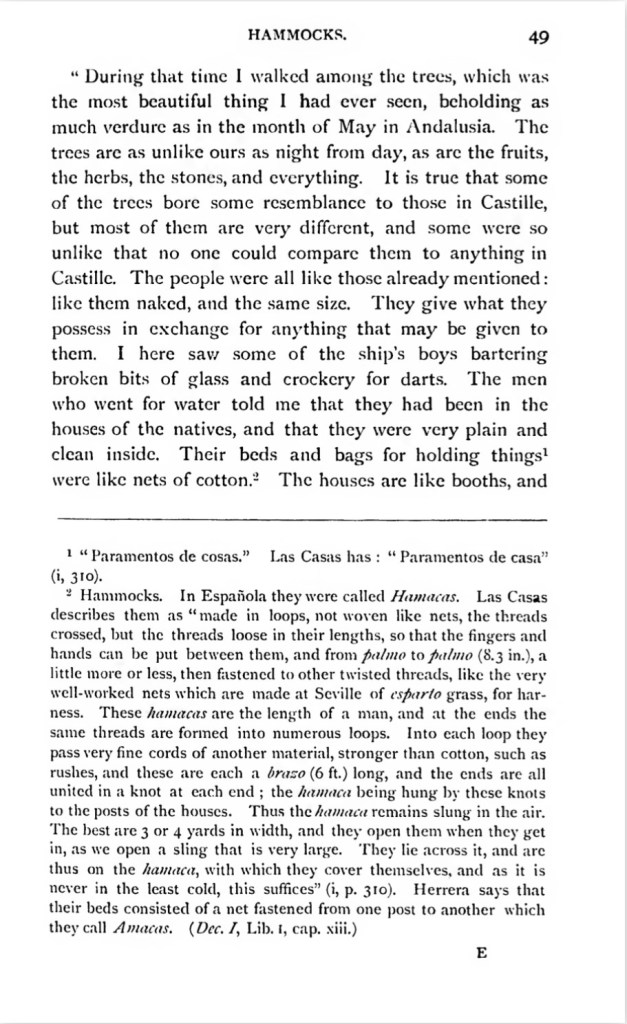
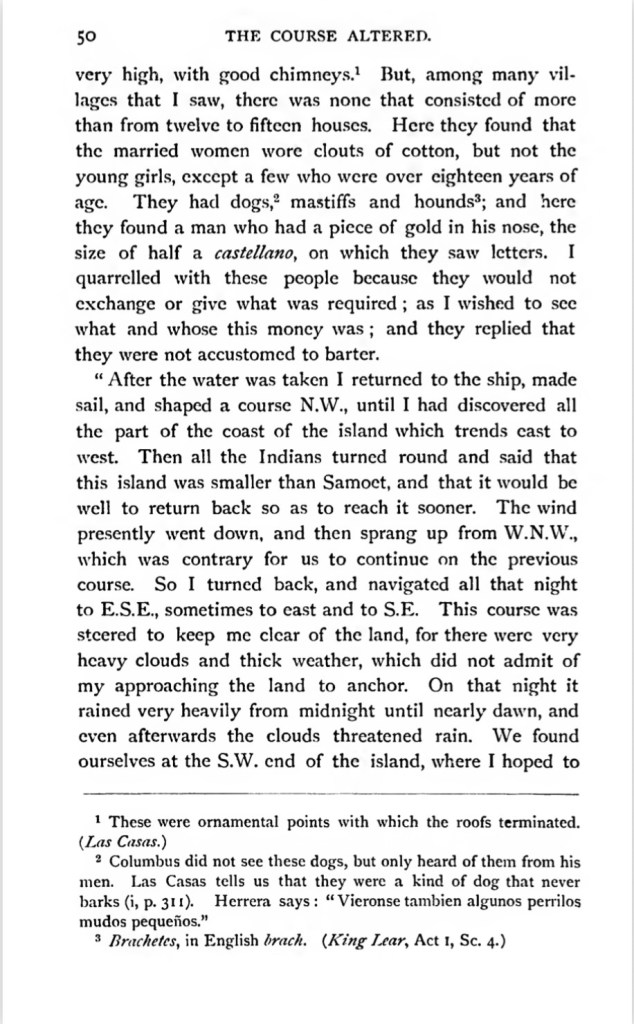
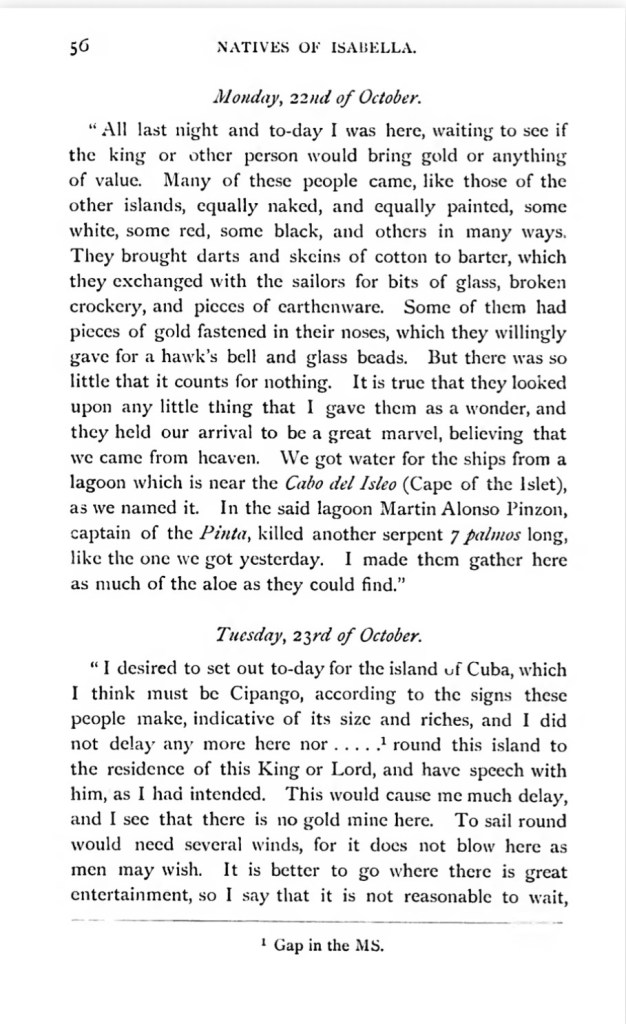
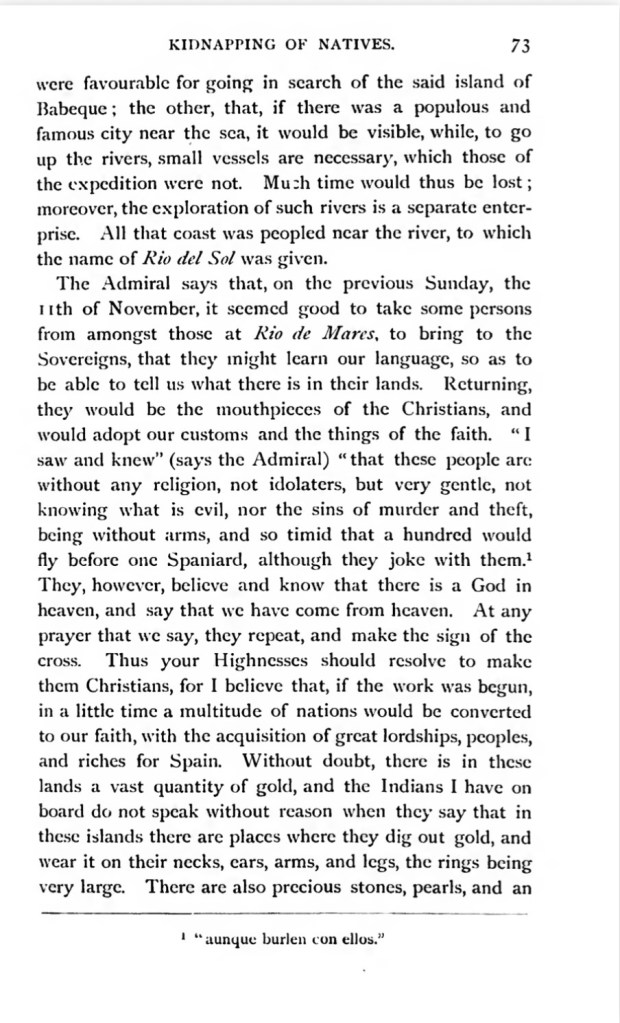
But this is not why I am writing this article today, on the 250th anniversary of the founding of the United States from the shambles of old monarchy and venture Companies. I am more a student of religion, myself, and as such, I find the whole history of the world affixed to a page on the 96th of this edition.
What, exactly, does Columbus mean by Heaven, in these pages, after all, when he says the Natives (the Tiano) believed him and his crew to have come from there, as they sailed through the chain of islands hunting iguanas, snakes, sea turtles, and parrots—inquiring after gold and cotton?
Ovid, Book I Fable III
[Translation by Henry T. Riley]
“The pine-tree, cut from its native mountains, had not yet descended to the flowing waves, that it might visit a foreign region; and mortals were acquainted with no shores beyond their own. Not as yet did deep ditches surround the towns; no trumpets of straightened, or clarions of crooked brass, no helmets, no swords then existed. Without occasion for soldiers, the minds of men, free from care, enjoyed an easy tranquillity.
“The Earth itself, too, in freedom, untouched by the harrow, and wounded by no ploughshares, of its own accord produced everything; and men, contented with the food created under no compulsion, gathered the fruit of the arbute-tree, and the strawberries of the mountain, and cornels, and blackberries adhering to the prickly bramble-bushes, and acorns which had fallen from the wide-spreading tree of Jove. Then it was an eternal spring; and the gentle Zephyrs, with their soothing breezes, cherished the flowers produced without any seed. Soon, too, the Earth unploughed yielded crops of grain, and the land, without being renewed, was whitened with the heavy ears of corn. Then, rivers of milk, then, rivers of nectar were flowing, and the yellow honey was distilled from the green holm oak.”