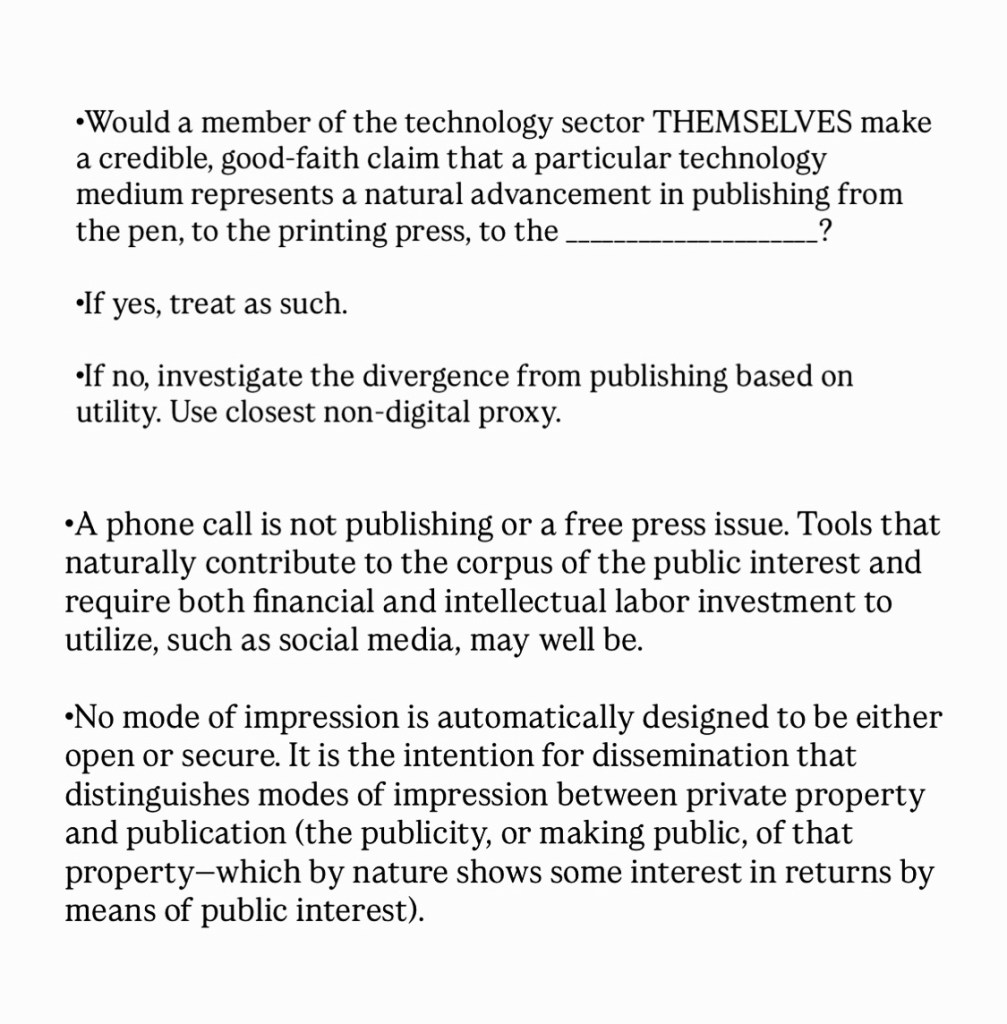
It’s odd that accessibility to the creation of media and the stewardship of data should represent such a quantum logical disjunction from older, perhaps more formal-feeling modes of communication, when most functions of social and other online media have direct genesis from traditions of print media with far less ambiguous roles.
The newspaper is not just articles and editorials, but classifides, sales, job listings, obituaries, and other formal matters of record.
The fact that the base claim and justification of the imposition of digital technology would likely be that it effectively consolidates a role previously reserved for those with more access to the creation and dissemination of media (film, television, radio, press), and thus an advancement of democratic values—while ostensibly having revoked those rights previously allocated to the act of publication by presuming unfettered privitization by their hosting of ephemeral archives—seems logically self-contradictory.
The difference between a home video and a public film (whether monetized or not) is its intention for publicity. Taking the leap to publicity by making its technical appendages universally available does not create a monopoly on intellectual and artistic content.
To presume so is fantastical and self-negating. No one would consent to “publicity” being a synonym for “private profiteering ad infinitum” without explicit forfeit of the natural enrichment by means of public returns. To assume so is like assuming that the local paper had effortlessly taken possession of a cow when it published the sale or auction of a cow.
Purveyorship (paper boys), storage (warehouses, libraries), and publication (sales) have been amalgamated. The roles of the authorship and the public interest have not been bundled into these. The platforms would cease to function otherwise.
Large Language Models, it follows, are archival storage and creative purveyorship. They do not attest the same dynamics of returns to original authors by ways of publication for the benefit of public interest.
Digitization is not carte blanche for the theft of impressions and the obfuscation of authorship.

