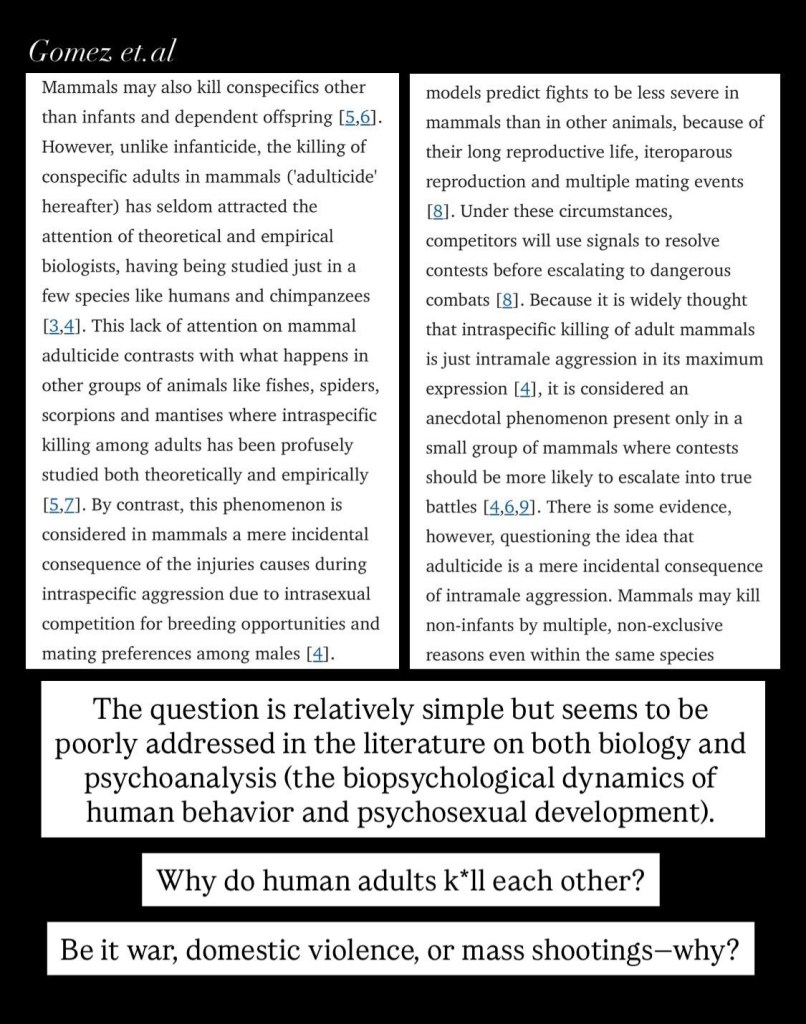
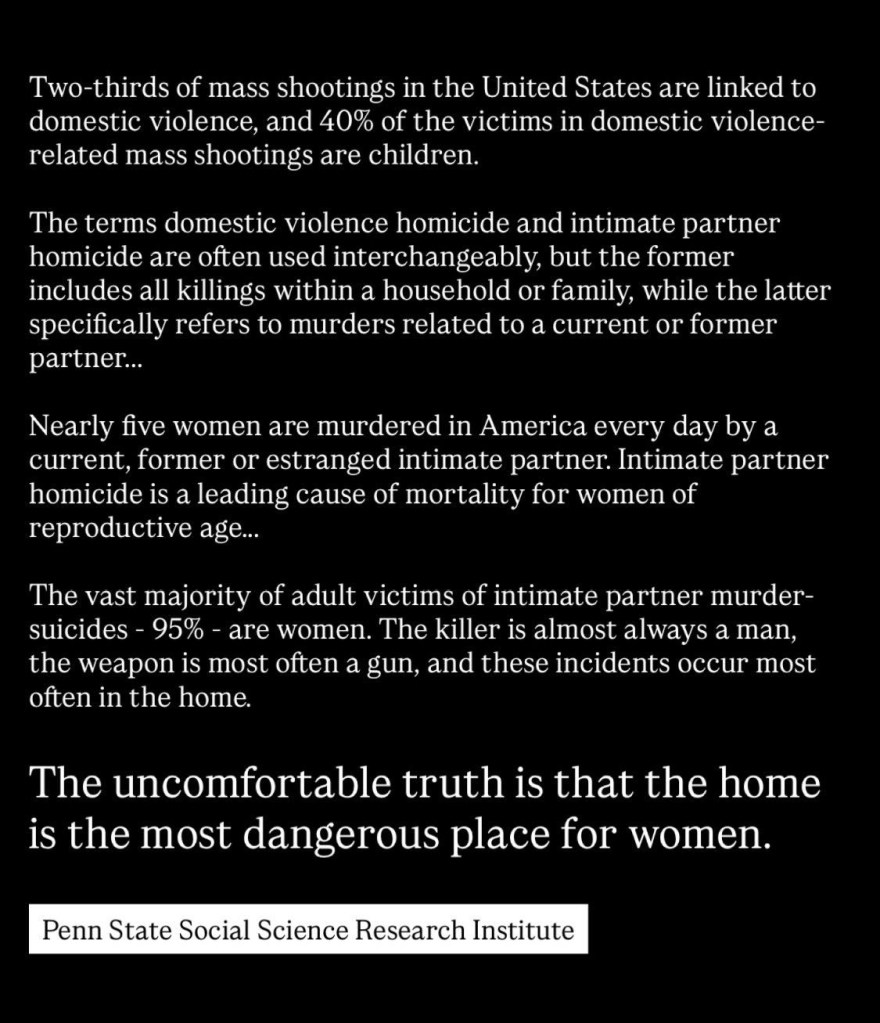
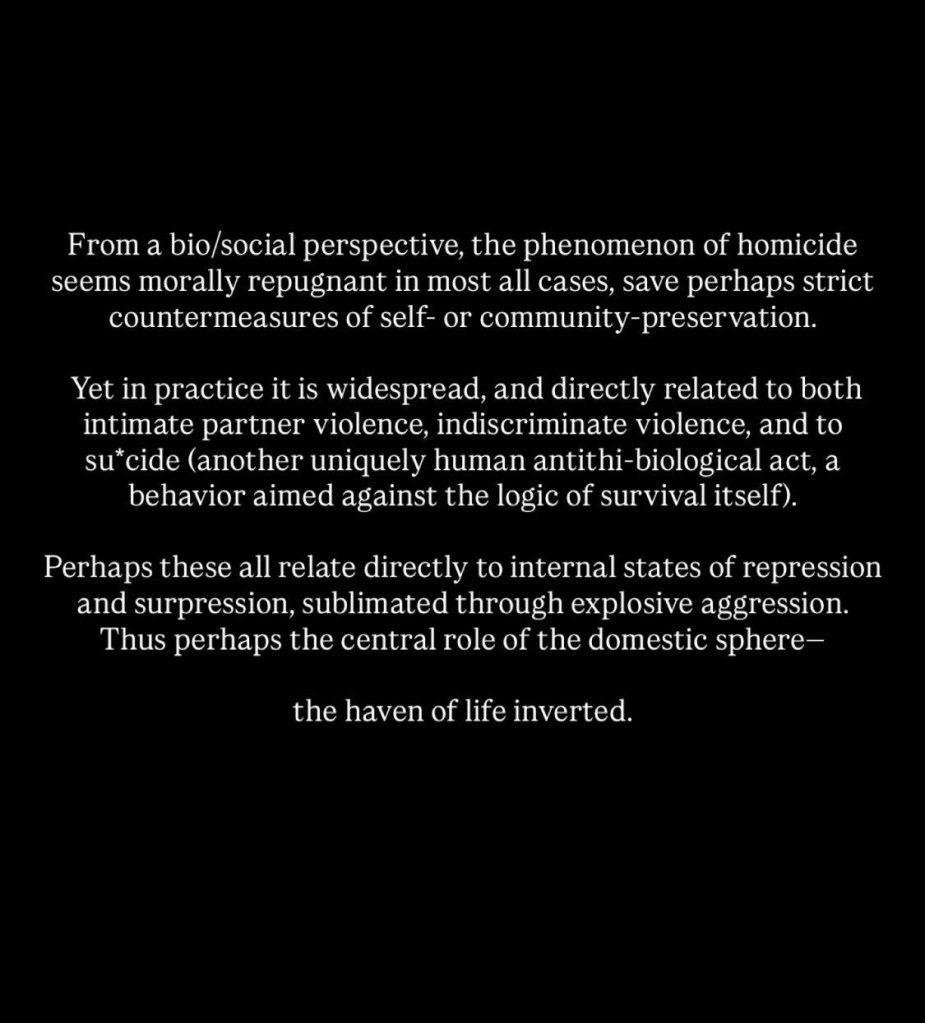
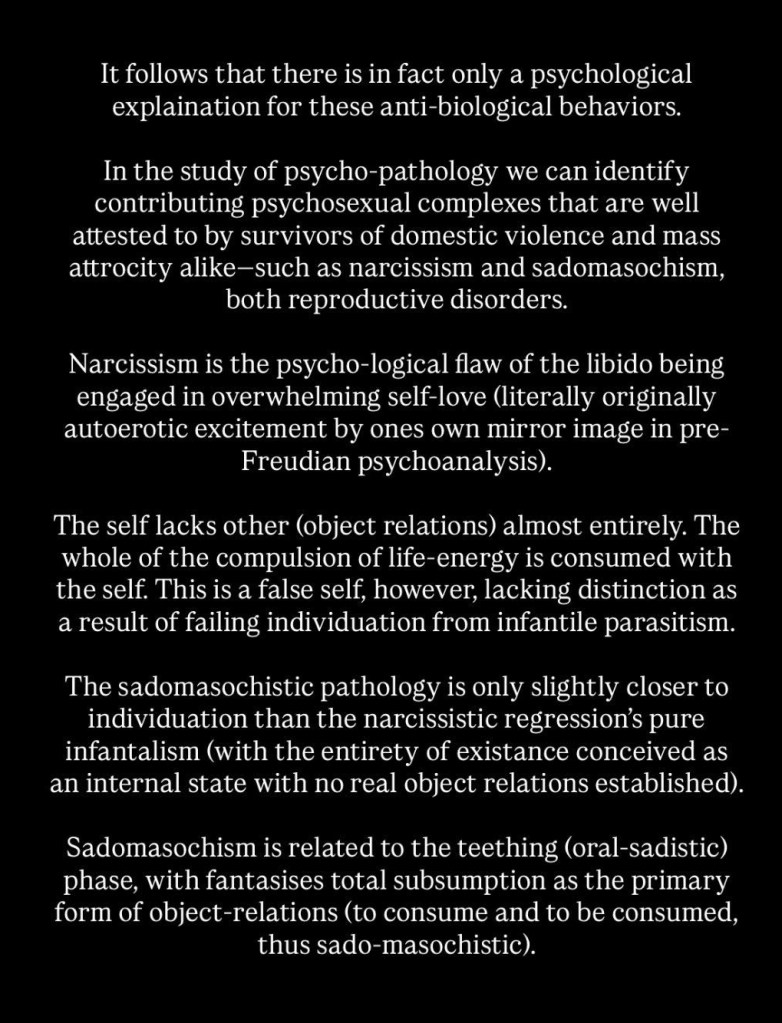
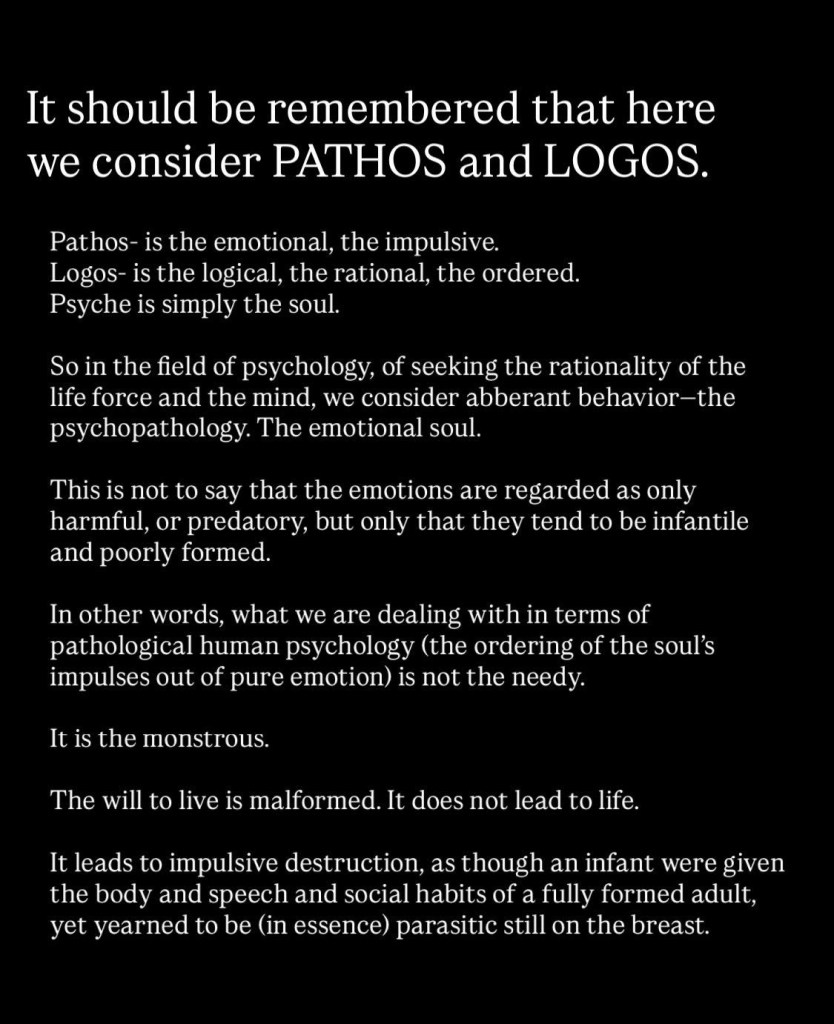
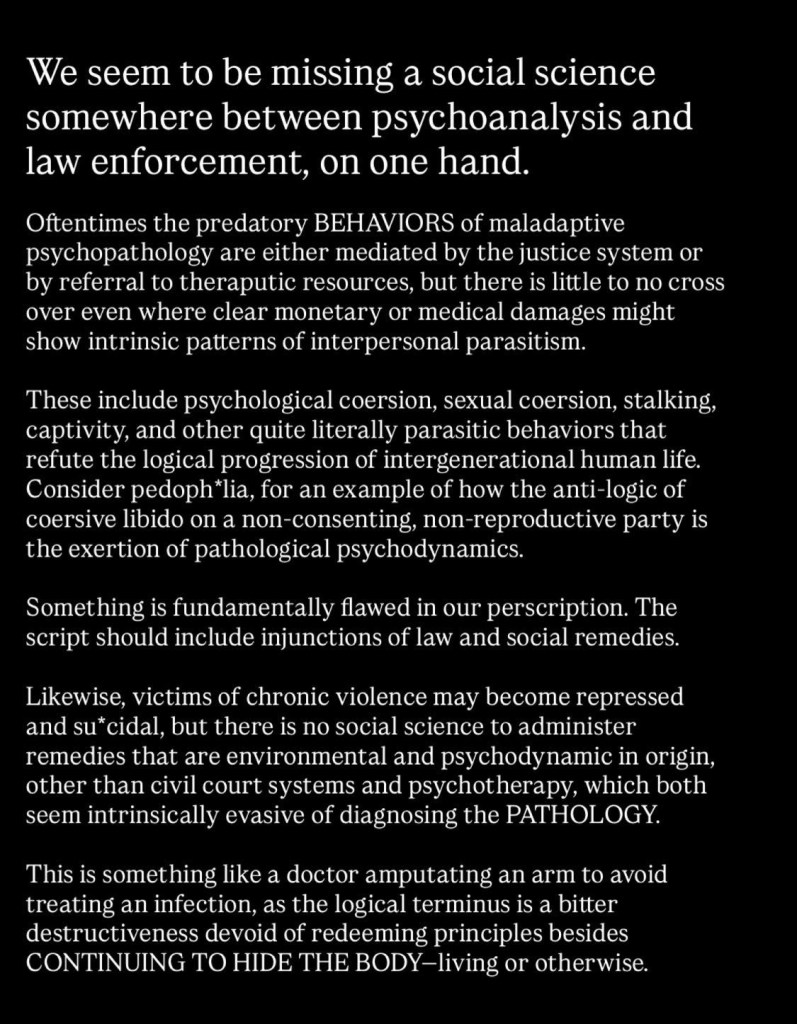
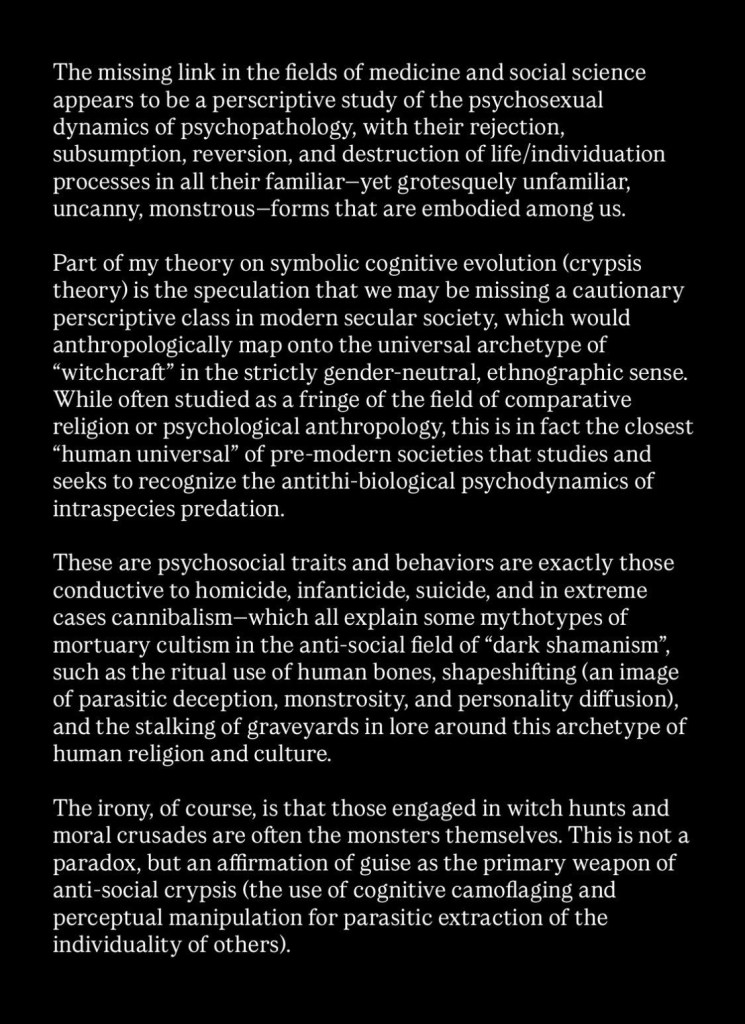
The missing link in the fields of medicine and social science appears to be a perscriptive study of the psychosexual dynamics of psychopathology, with their rejection, subsumption, reversion, and destruction of life/individuation processes in all their familiar—yet grotesquely unfamiliar, uncanny, monstrous—forms that are embodied among us.
Part of my theory on symbolic cognitive evolution (crypsis theory) is the speculation that we may be missing a cautionary perscriptive class in modern secular society, which would anthropologically map onto the universal archetype of “witchcraft” in the strictly gender-neutral, ethnographic sense.
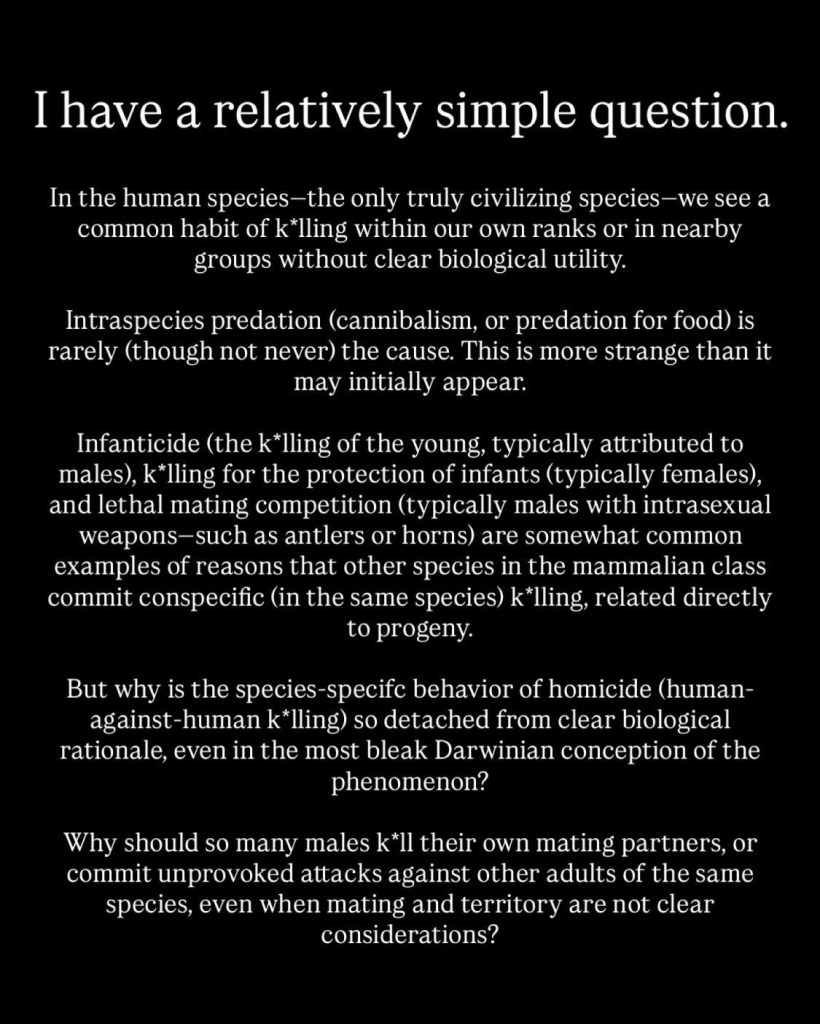
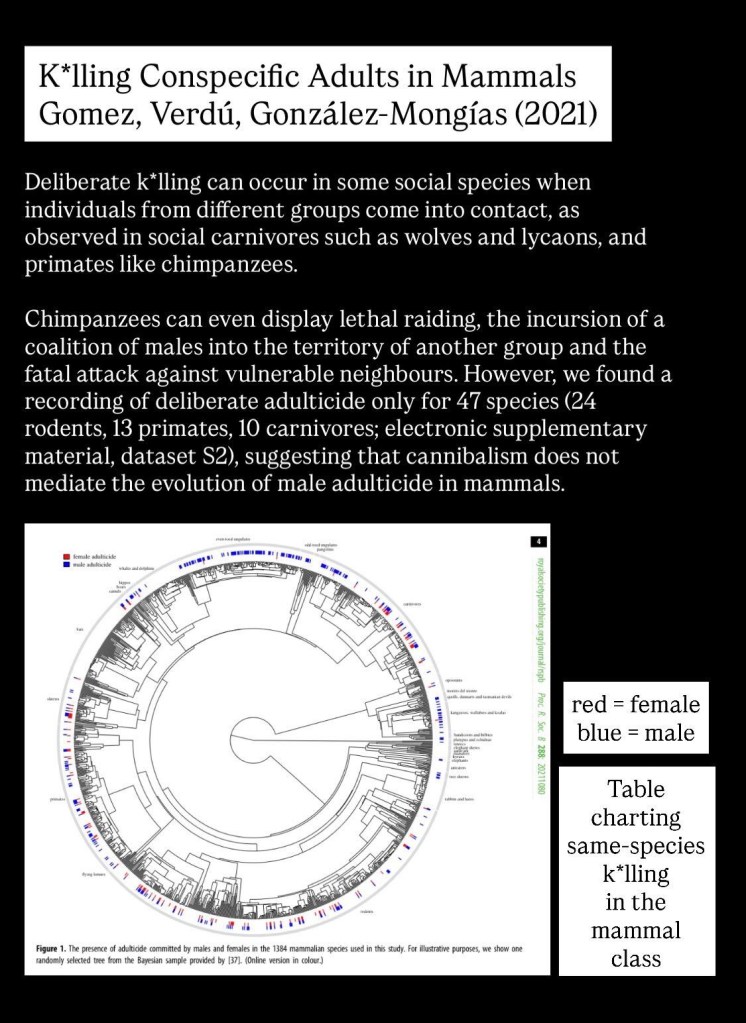
While often studied as a fringe of the field of comparative religion or psychological anthropology, this is in fact the closest “human universal” of pre-modern societies that studies and seeks to recognize the antithi-biological psychodynamics of intraspecies predation.
These are psychosocial traits and behaviors are exactly those conductive to homicide, infanticide, suicide, and in extreme cases cannibalism—which all explain some mythotypes of mortuary cultism in the anti-social field of “dark shamanism”, such as the ritual use of human bones, shapeshifting (an image of parasitic deception, monstrosity, and personality diffusion), and the stalking of graveyards in lore around this archetype of human religion and culture.
The irony, of course, is that those engaged in witch hunts and moral crusades are often the monsters themselves. This is not a paradox, but an affirmation of guise as the primary weapon of anti-social crypsis (the use of cognitive camoflaging and perceptual manipulation for parasitic extraction of the individuality of others).
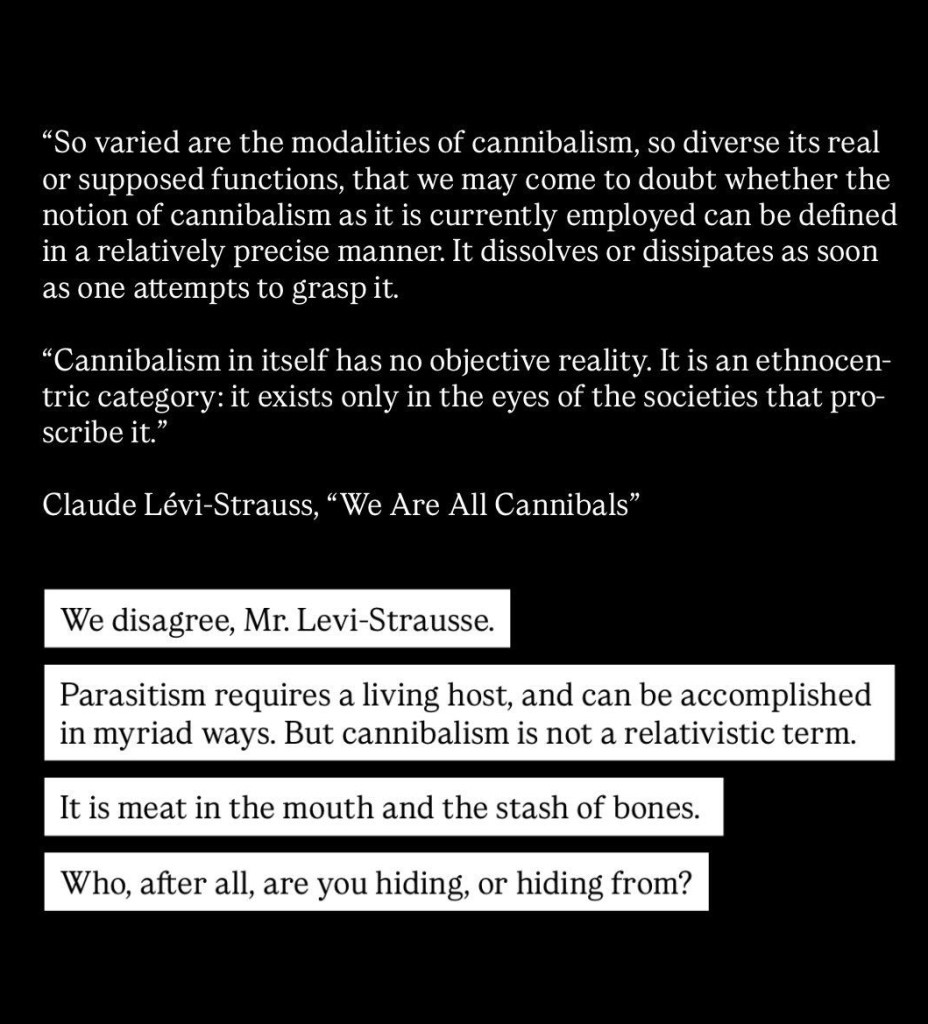
“So varied are the modalities of cannibalism, so diverse its real or supposed functions, that we may come to doubt whether the notion of cannibalism as it is currently employed can be defined in a relatively precise manner. It dissolves or dissipates as soon as one attempts to grasp it. Cannibalism in itself has no objective reality. It is an ethnocentric category: it exists only in the eyes of the societies that proscribe it.”
Claude Lévi-Strauss, “We Are All Cannibals”
We disagree, Mr. Lévi-Strauss. Parasitism requires a living host, and can be accomplished in myriad ways. but cannibalism is not a relativistic term.
It is meat in the mouth and a stash of bones.
Who, after all, is this “philosopher” hiding? Or who is he hiding from?
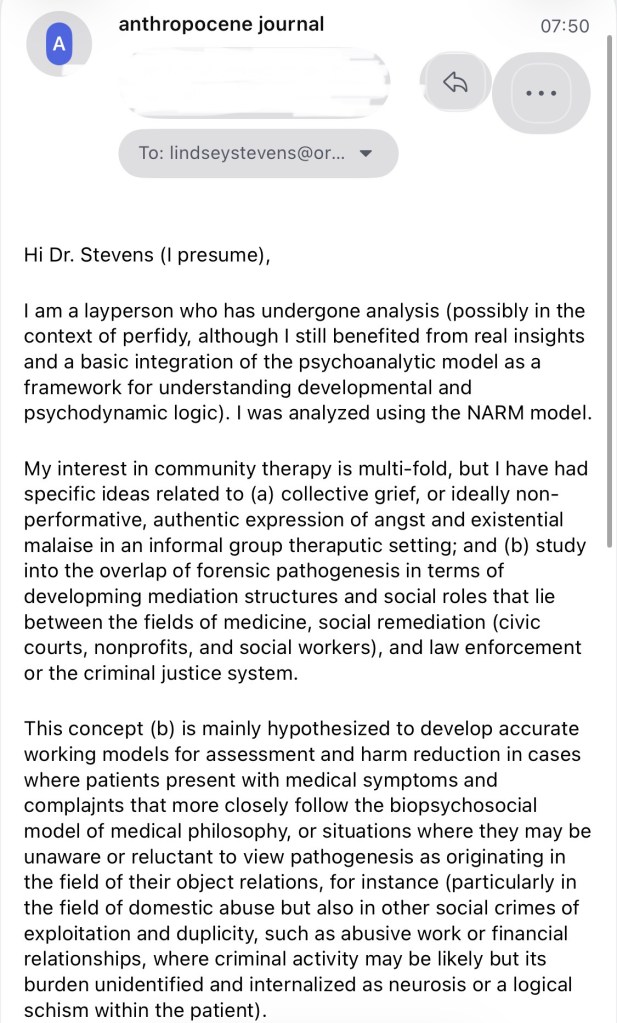
09/26/26 Letter to Lindsey Stevens of Oregon Psychoanalytic Association:
Hi Dr. Stevens (I presume),
I am a layperson who has undergone analysis (possibly in the context of perfidy, although I still benefited from real insights and a basic integration of the psychoanalytic model as a framework for understanding developmental and psychodynamic logic). I was analyzed using the NARM model.
My interest in community therapy is multi-fold, but I have had specific ideas related to (a) collective grief, or ideally non-performative, authentic expression of angst and existential malaise in an informal group theraputic setting; and (b) study into the overlap of forensic pathogenesis in terms of developming mediation structures and social roles that lie between the fields of medicine, social remediation (civic courts, nonprofits, and social workers), and law enforcement or the criminal justice system.
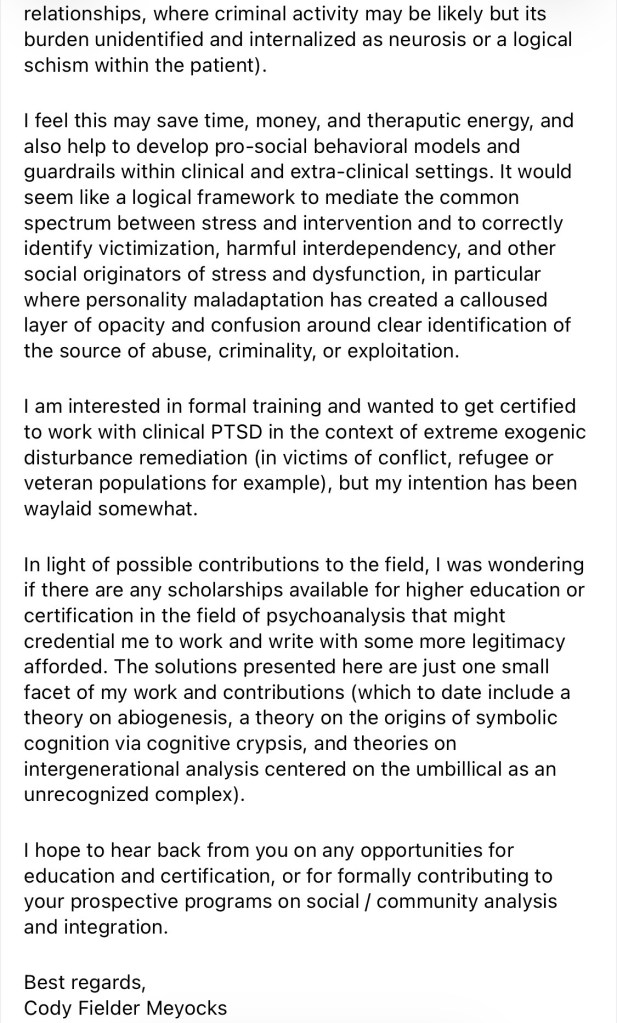
This concept (b) is mainly hypothesized to develop accurate working models for assessment and harm reduction in cases where patients present with medical symptoms and complajnts that more closely follow the biopsychosocial model of medical philosophy, or situations where they may be unaware or reluctant to view pathogenesis as originating in the field of their object relations, for instance (particularly in the field of domestic abuse but also in other social crimes of exploitation and duplicity, such as abusive work or financial relationships, where criminal activity may be likely but its burden unidentified and internalized as neurosis or a logical schism within the patient).
I feel this may save time, money, and theraputic energy, and also help to develop pro-social behavioral models and guardrails within clinical and extra-clinical settings. It would seem like a logical framework to mediate the common spectrum between stress and intervention and to correctly identify victimization, harmful interdependency, and other social originators of stress and dysfunction, in particular where personality maladaptation has created a calloused layer of opacity and confusion around clear identification of the source of abuse, criminality, or exploitation.
I am interested in formal training and wanted to get certified to work with clinical PTSD in the context of extreme exogenic disturbance remediation (in victims of conflict, refugee or veteran populations for example), but my intention has been waylaid somewhat.
In light of possible contributions to the field, I was wondering if there are any scholarships available for higher education or certification in the field of psychoanalysis that might credential me to work and write with some more legitimacy afforded. The solutions presented here are just one small facet of my work and contributions (which to date include a theory on abiogenesis, a theory on the origins of symbolic cognition via cognitive crypsis, and theories on intergenerational analysis centered on the umbillical as an unrecognized complex).
I hope to hear back from you on any opportunities for education and certification, or for formally contributing to your prospective programs on social / community analysis and integration.
Best regards,
Cody Fielder Meyocks