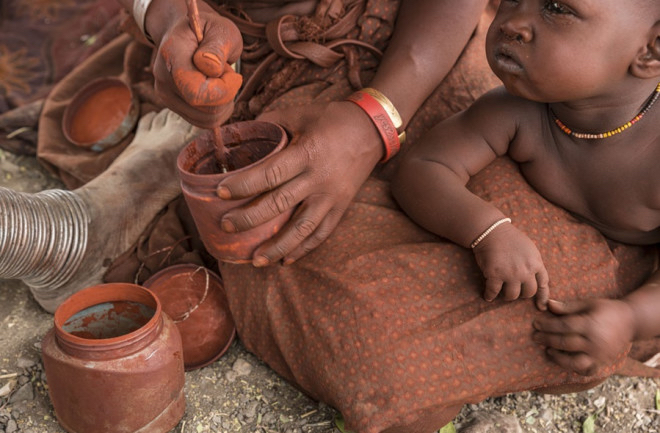
In addition to thinking of preoccupation with the generative function as it relates to umbillical (rather than merely phallic) ideation, I want to propose a hypothesis as to why newborn babies cry which might help evolve us beyond previous theories of primary libidic formation, including:
•Klein’s theory of primary object-envy (the envy of the mother’s breasts’ ability to give life and sustainance),
•Freud’s (empirically debunked, yet still theoretically compelling) theory of primary narcissism,
•Kernberg’s theory of primary aggression
I would propose a perhaps much more intuitive theory of primary grief in the moment of birth-realization in the newborn infant, which is at once a kind of somatic shock at leaving the womb, and also a formative seed of psychic transformation for the newly biologically seperate (yet still dependent—now parasitic rather than gestating) individual.
This transmutation is likely simultaneous and congruent, but since the somatic grief of leaving the womb appears existential and irreconsilable, yet may bear a formidable trace of longing to return (grief serving as something of an emotional bridge between the emergence of the individual and the safety of the womb)—I must believe that this overwhelming grief evolves with reasonable distinction into an instinctive kind of resentment, or what I propose to call PRIMARY RESENTMENT: the longer-lasting transformative experience that follows from the first strain imbued by the dawning of individuation.
This logical intuition of a primary grief and secondary resentment flows directly from what I think is a shared intuition between researchers of oceanic nourishment and omnipresent satiation in the womb—perhaps the emotional blueprint for what evolves into the nirvana principle.
Yet this state of womb-nirvana—though likely a common strain of intuitive memory rather than mere idealism and conjecture—seems only awkwardly defined by the lack of attention to the primary strain at biological seperation and individuation.
It follows that Klein’s “envy” of the all-giving mother (whose provisions and failures form the basic patterns of relation, aggression, and frustration in object relations) is not the original source of the personality orientation, but rather that some level of individuality likely impresses itself nearly instantaneously (though more universally) on the newborn from the moment of individuated realization, when the umbillical cord is cut and the mother becomes an external object in a strictly biological, if not also deeply phenomenological sense.
Yet there may already be shades there, in the grief and resistance to it, and in the sudden alienation of a newfound world and individuality—of how the personality will later form and provide for its own coping and soothing strategies in the earliest moments after birth.
I’m not sure why I haven’t seen this put into language yet, or if it has been then why I’m not aware of a continuity in terminology for it.
I find it likely, in retrospect, that all theorists (perhaps myself included) may be projecting a little. Freud was a known narcissist, and so may have developed his theory of “primary narcissism” to universalize his own most deeply-engrained coping strategy, to the point where it provided a similar meaning and function to the womb-nirvana itself in his research and metalogical analysis.
Klein has something of a fixation on the breast and the role of the mother-provider. Perhaps Kernberg was looking for aggression because he studied it most accutely. I would not be surprised if I am proposing “primary grief” because I have a way of choosing remorse and existential struggle as the primary urges in my own life.
My point being that even projections may tell us something about the role of womb-nirvana in human memory and the enduring development of the psyche—perhaps something most crucial in WHAT WE SEE, as individuals, when we look backward at the liminal cave entrance of birth and try to sense what would make us feel whole again.
Not what is missing, but what is most deeply present—what would have to be undone in order to return to that oceanic nourishment, and the closest memory we have to deep history and biological memory as individual witnesses.
And perhaps here we can discern more about the character of religion and religious idealization when it comes to searching internally for gateways to the oceanic cosmos from which we feel so woefully seperated.
It seems often that myth is a way of tying back on the umbillical cord, or attempting the feel the countours of the door and passageway that is at once a catacomb and a nourishing harbor of eternal light in our intuitive memory.
Alongside the complex developmental and emotional complexes that must accompany a reconception of primary impulse as being formidably constituted of GRIEF and ensuing RESENTMENT (and this is perhaps an rvolutionary strategy which sets us up for complex emotional push and pull that helps us form interpersonal dependencies throughout our entire lives)—
it is worth remarking on the role of what I would call primary and secondary individuation.
I would classify the shock of birth as neither, strictly speaking, as the newborn is still in a state of helpless dependency. Thus this moment of grief and strain might be called CURSORY INDIVIDUATION.
From my point of view, the format for psychological individuation must be grounded in biology, or it would have no use or meaning at all.T
hus primary individuation must be closely tied to weaning from dependency on the breast, and likely spans a considerable age range—from around 3 to 8 years old—or from the very earliest time an individual might survive if seperated in the wild. We have for reference some very few cases of feral children, and only then these are rare and grave survivalist crisises rather than the norm of development—yet even the luckiest happenstance of individual independence must be considered as biologically foundational.
Nature adapts, often, to extremes and fatal uncertainties rather than the norm of daily living—or else no animal would bother to camoflage their fur or move warily through the brush, as they get eaten every day anyhow.
Some might argue that the development of the individual is never a complete seperation from maternal or parental dependency, but rather that the miasma of dependency is internalized as objects, neuroses, and introjects to accompany us throughout our lives into maturation—that there is no biological distinction of the individual, and all we have to call our own is this raw instinctive substance wallowing in a subconscious of envy, desire, and resentment.
I would reply that if individuation is not rooted in the concept of biological independence of a mature individual then we have lost the original insight of psychoanalysis altogether. Individuation muat be biological if it is not meaningless, and I think the necessity of intergenerational development and overlap makes very clear that the Oedipal or Electra complexes would not suffice for vows taken on our wedding day.
Furthermore, biological individuality has deeper meanings for maturation and life for humans, as we are wonderfully social and complex interdependent animals even beyond our individual biology. The fact that culture and socialization are inherently biological, inalienable, and primeival domains of human life can not be overstated enough.
However, to return to the case of biological individuation in terms of earliest feasible viability, we might look to the basic threshold of development equating to the maturity of an individual where they could survive for a time unaided in the wild in the luckiest of circumstances—perhaps a toddler could qualify, even if it is long enough to sustain an unaided journey of a half-dozen miles or less, to what may equate to the nearest tribal band in hunter-gatherer terms.
What I would define as biological individuation would be exactly akin to feasible self-reliance (a foraging instinct) and a basic sense of orientation (a cognitive capacity for spaciotemporal exploration and homing instinct)—and of course the basic motor skills to make these useful.
I seems to me that between this basic threshold and the age of final weaning (in the wild around 5-8 years of age) we are looking at the developmental arc of individuation and the early formation of an independent member of a social group (whether in band / tribal society or modern day Tokyo). In this window of development the individual will gather skills, linguistic fluency, collective identity (cultural mores, morals, myths, and customs), and all the more basic social orientations that will lead in due time to viable biological autonomy, where under normal circumstances, survival without the benefit of breastfeeding is not only possible but has reached a level of exhaustion through the natural course of time.
This primary individuation stage may be followed by a further biological viability, in the form of personal autonomy that might survive without a cultural collective (in rare extreme cases) or is at least willing and able to hunt and forage with maturity and aptitude—to the extent that if they were to get lost or seperated, an individual might survive a time (or even their whole lives) independently of their original home-culture.
Ideally, in band society each individual will be equipped with a level of autonomy where they contain the basic trappings of their entire culture without strict biological need to reference collective life. The idea that mature individuality is a stage of development where an individual is considered competent enough in their cultural group to have earned standing as a full member of society is a broad universalist claim, but again I am referencing rites of passage as evidence for cultural rituals of recognition and analogy for the BIOLOGICAL SUBSTRATE OF INDIVIDUATION.
Cultural identity through initiatory rights may be simply recognizing the maturation process by way of cultural conception, which incorporate both puberty and individual autonomy into biological independence.
Before continuing I would like to refine my vocabulary, as what I’m describing involves both physical developmental biology and its psychological concurrences, which we are uniquely aware of in light of being humans able to share, reason through, and communicate our internal experience.
I asked Deep Seek for help with biological terminology and received the following clarifications (bracketed additions [] are mine—edited slightly:
“Psychoanalytic theory essentially borrows the biological timeline and reinterprets it psychologically.
The core recognition is this: psychological independence mirrors trophic [nutritional] independence, and both are mediated through the feeding relationship.
Here’s the direct mapping:
Biological Stage Psychoanalytic Parallel (Freud, Klein, Winnicott)
Matrotrophy / Total dependency / Primary narcissism + symbiotic phase (Mahler) — infant perceives self and mother as one unit; psyche is “undifferentiated.”
[Technically this is hemotrophic in placental animals, which is an extremely important distinction—symbiosis is interspecific (meaning between species) while hemotrophic describes placental nourishment during gestation, as opposed to eggs for instance where the yolk provides nourishment to the developing individual organism.]
Obligate lactotrophy / Oral stage (Freud) — libido centered on the mouth; the breast/milk is the first “object.” Pleasure = incorporation.
Mixed feeding / Weaning transition / Transitional object (Winnicott) — the blanket/teddy replaces the breast as a psychological bridge between self and other. Weaning = first “loss.”
Trophic autonomy / Object constancy + individuation (Mahler) — the child can hold a mental image of the mother while physically/psychologically separate.
[In biology, the stage of acceptance into the adult population is called “recruitment”—which here has direct parallels to rites of passage and often less formal social cues in the maturation process.]
Reproductive maturity / Genital stage + capacity for mature object love (Jung / Campbell) — giving to others, not just receiving.
[Here I am uncertain where psychoanalysis has made itself a useful guide of more than just regressive metacognitive therapy (the “talking cure”) and psychoanalytic practice itself, and where we see it as a biological/anthropological roadmapping for the healthy intergenerational development of the species. (Not to sound too technical.)
Surely there is an abundance of theraputic and metacognitive insight to be unpacked from analyzing the healthy integration of these stages, but the profound self-awareness that psychoanalysis imbues by acquainting us with our own PRE-INDIVIDUATED SUBCONSCIOUS is unlikely to be rivaled in theraputic value.
Nonetheless, universalism and scientific definition of later developmental stages ought to open new forefronts in the theme of psychoanalytic therapy, rather than merely contributing to popular self-help literature, for instance.
There is a profound exchange in the birthing, individuation, maturation, and post-maturation (ie. post-menopausal or functionally libidic / reproductive) process in the human species, that includes the important role of grandparents in our unique primatology, for instance—
as well as all the ways that interdependence, independence, INTRACONFIDENCE (to coin a term), and even mortuary recognition (preperation for death, or EXISTENTIAL DEVIDUATION (to coin another term), add to human life on both an individual psychological and an extrinsic cultural level.
The closest that I can conceptualize is the metacognitive anthropology (or comparative religion) of Campbell, whose work I consider myself to be taking after, although I believe he became lost in metaphysics and the Jungian unreal in a way that makes it more than necessary to recenter BIOLOGY, if the field is still meant to be not just a philosophical outgrowth of Darwinian biology and Enlightenment empiricism, but also a branch of MEDICAL REMEDY, and remediation applicable to individualized therapy and the search for a deeper understanding of wholeness and the species-soul in the fields of biology, philosophy, and medicine.]
Key theoretical insight:
· Melanie Klein framed the breast as the prototype of all later dependency relationships — ambivalence (love/hate) toward the feeding source becomes the template for all future attachments.
· D.W. Winnicott explicitly linked biological weaning to psychological disillusionment — the mother gradually “fails” to meet every need, which is necessary for the infant to develop a separate self.
· Margaret Mahler coined the term “psychological birth” — occurring not at delivery, but at the completion of the separation-individuation process (around 2–3 years), which coincides with functional feeding independence.
The unifying concept:
Both biology and psychoanalysis recognize a critical window of obligate dependency, followed by a graduated withdrawal of supply (milk → solid food → emotional autonomy). If that withdrawal is too abrupt or too delayed, you get:
· Biology: failure to thrive, delayed weaning, metabolic issues.
· Psychoanalysis: oral fixation, dependency neurosis, borderline pathology (in severe cases).
The formal psychoanalytic term for the entire dependent period is:
“Absolute dependency” → “Relative dependency” → “Toward independence” (Winnicott’s exact triad).
So yes — the field not only recognizes the parallel, it centers it. The breast/milk is the original biological anchor for the psyche’s sense of self-versus-other.
So in recentering biological development, I need to apologize for my misuse of the term “parasitic” to refer to the breastfeeding stage on the whole—parasitism suggests a negative impact on the host, and obviously child rearing is of primary biological concern, so this can not be our root definition of real dependency or regressive coping strategies related to this stage.
However, negative or dysphoric resentment aimed at infant dependency (such as in unwanted or forced pregnacy) can and does have a real impact on the health of both mothers and children, such as in the caee of postnatal depression—and can even be lethal to the baby, the mother, or both.
Within the family unit, the transitional dependency stage—mostly defined by the period following primary individuation or viability, followed by the long period of adolescence through puberty and recruitment, where parental or communal group dependency evolves through shades beyond obligate lactrotrophy through transitional weaning and trophic autonomy—may also result in parental reaentment and hostility: depression or aggression.
We might well find cause to consider familiacide as some evidence of the ego/super-ego dystonic and dysphoric experience of harboring resentment towards one’s own progeny, despite lifelong interdependency (INTERTROPHIC DEPENDENCY) being recipricol in most human cultures and communities. Care for elders is a common repayment for the longterm guidemce and mixed interdependemcy of offspring or orphaned community members—this a biological pretext for mentorship is assumed.
These dynamics make parasitism a real dynamic in human biological and relational affairs, but distinguish it from healthy (or ideal, rather) development—in which long term mutualism, relationships for mutual benefit (+/+), appears to be the anthropological norm—as opposed to parasitism, in which one organism benefits while the other suffers losses to their own individual wellbeing (+/-).
So to clarify, our timeline of relational biological development looks something more like this:
Hematrophic (gestational, womb-nirvana, unindividuated) — Primary Grief, Primary Resentment, Cursory Individuation (the newborn) — Lactotrophic or Matrotrophic Dependency (obligate breastfeeding, sometimes artificially supplemented by substitute caregivers—through the oral sadistic phase to the early genital phase, where envy and object relations formulate core psychodynamics) — Primary Individuation (transitional objects through object permanency, the weaning phase of autonomous viability, or intertrophic dependency—mixed dependency) — Pubescent Maturity (trophic autonomy with relational maturation and obligate personality development, often supplemented by lifelong regression strategies, in preperation for recruitment) — Secondary Individuation (recruitment, maturity, full autonomy, courtship and relational sexuality / procreation) — Aging and Familial / Cultural Stewardship (METABOLIC CONFERRANCE, filling now the role of provider and caregiver oneself, both for one’s own offspring and the community at large—reintroducing intergenerational biological interdependence as the mature producer of metabolic continuity) — Deviduation (post-menopausal, or eldership position, stressing biological intergenerationality in the human species by way of, for instance, the grandmother theory, where elders provide necessary child rearing and cultural orientation roles even into relative infirmary)
And here, we have mapped the anthropological lifecycle in totality onto individual biology and psychology. We can borrow from all fields and apply them both to analysis, remedy, metacognitive therapy, and other medicines without fear of losing sight of our original aim, which was the reintegration of pre-individuated personality formation through metacognitive recovery—
which hopefully now stretches through the umbillical, even into the cultural and epigenetic biology of memory and identity—
and we have a full biological sketch of the subsistance strategies and parallel regressive soothing mechanisms of individual and collective psychology.
We have not transcended the real, but approached the doorway of the dream world—and we have not transcended the natal or biological autonomy, as to do so would be better described by real biology and the limitations of organic individual growth and development.
We have defined the formative and subconscious stages of individuation and adaptation to this PRIMARY RESENTMENT with greater authenticity and clarity.
Now we can focus more clearly of healthy and pathological dependencies, interdependencies, regressive self-soothing strategies, and object relations without losing our sense of primacy in the autonomy of individual phenomenology, which is best defined by the newborn’s overwhelming and irretractable sense of GRIEF.
POSTSCRIPT:
In light of this nuance, we might view religious phenomenology in a new light as well, and distinguish social behavior and intergenerational integration from parasitic or pathologically regressive cultism.
For instance, metempsychosis (glossgalia, or speaking in tongues) likely implies a regressive deconstruction of primary inculturation back to a pre-linguistic state, or the unanchored disinhibition of social structuralism to pursue a regressive kind of liberation through autonomous deculturation.
While there’s certainly nothing harmful or pathological about pursuing proto-linguistic experience and uninculturating oneself alone, for the purpose of temporary personal exploration, it seems obvious how an addictive complex of ecclesiastic regressivism could lead to a destructive restructuring through cult formation, likely guided by imposed senses of interdependency and obligation to the new group and worldview, based on the transformative miasma of resorting to infantile formlessness (obliteration of primary integration and inculturation, rather than the metalogical analysis of enculturated structures).
It follows that healthy integration into metaphysical and deeper cultural wisdom in the domains of education, religion, and maturity should serve to further integrate and socialize the individual in ways that may be difficult, perhaps deviant from daily norms at times, and often metalogically self-negating in aesthetic practice (for metacognitive effect), but follow from a yogic impulse (in the literal sense of rejoining, remembering, and reintegrating into reality) rather than a socially sublimated nihilism of reinventing infantile permissiveness or dependency by autonomic regression.
In other words, knowledge and the quest for knowledge should help us grow up and become more fully human, and the exploratory vanguard of society and education must likewise remain firmly bound to biological and cultural species-interest to render itself useful, cohesive, and functional between generations.
I have joked in the recent past that I am a homeostasisarchist, and I think this is actually exactly what I am—for me, at least, this is the goal of psychoanalysis, philosophy, metacognition, the sciences, and cultural continuity.
I would like to see sustainable cultures, individuals, and ecologies thriving intergenerationally with as little upheaval and anthropological (or geological, or ecological) referendum as possible. That might mean change, someday, to become real and rational, but it would be gentle and consensual, or antithetical to the human instinct for solace in conscience and consciousness altogether.
This ought to be the point of rational analysis and social organization—but it is all too human to resist adaptation based on organic hesitancy oftentimes, and for this I can only express wry resentment and the (sometimes reluctant) gratitude I harbor to be alive enough to keep trying at all.
I prefer certainty, steadiness, and trustworthiness myself. I do not indulge in what is not beneficent to the best of my abilities and awarenesses. Ironically, this has made some of my fellow countrymen quite skeptical of me, and I would rather allow that being the victim of projective identification can reflect anxieties and repressed fantasies of allegedly widespread metalogical structures—than to point flatly to the failure of their own individuation, in choosing someone with good intentions to victimize.
The result of persecutory delusions is often persecutory hysteria, which is antisocial behavior far beyond a ledge of rationality and acceptability that one can simply return from an excursion into wild nihilism and expect to reintegrate into reality very easily—this casually leads to normalizing a sense of ultimatum where one end is utter self-annihilation, or perhaps existential annihilation (whereas, again, it might be better for society and its mores, or the universe itself, or planetary biology, to have never existed at all—than to come to terms with having thrown oneself into a state of aimless chaos from which there is no comprehensible return to the folds of human understanding without unbearable senses of anxiety, grief, shame, and paranoia).
With this considered, the alternative is catastrophic, and objectively worse for all involved: to indulge in fantastical hysteria and nihilism until reality itself dissolves, to absolve their conscience of its own horrors and treachery by succumbing to the nothingness which seems most preferable to any existential alternative.
Cycles of chaos can only endure for as long as fantasies of total annihilation are condoned or allowed by all those aware and complicit. The choice is simply collective, cultural humanity of a resignation to the caustic disillusionment of reality based on an apocalyptic cultism, from all I can discern.
When it comes to the future, never expect to eat promises, or reap daydreams.